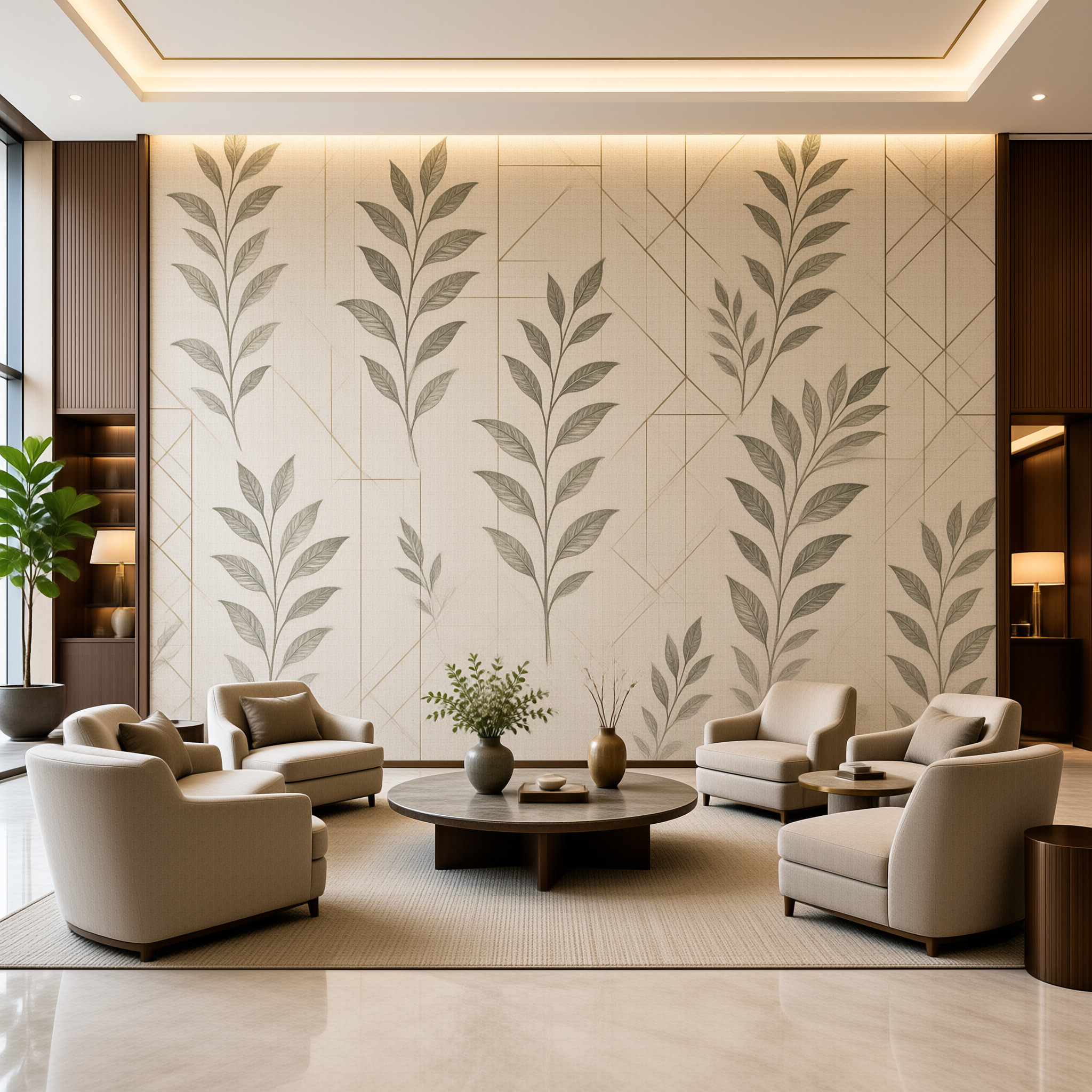
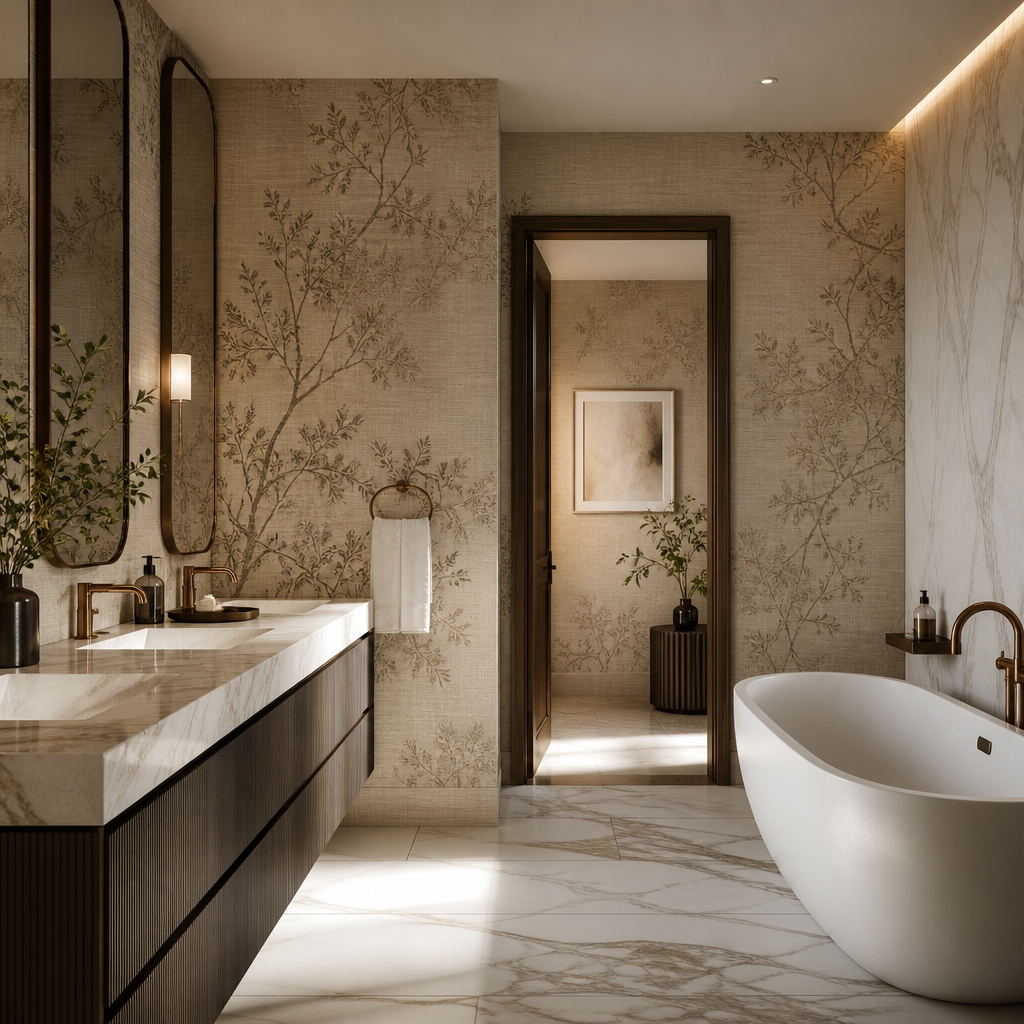
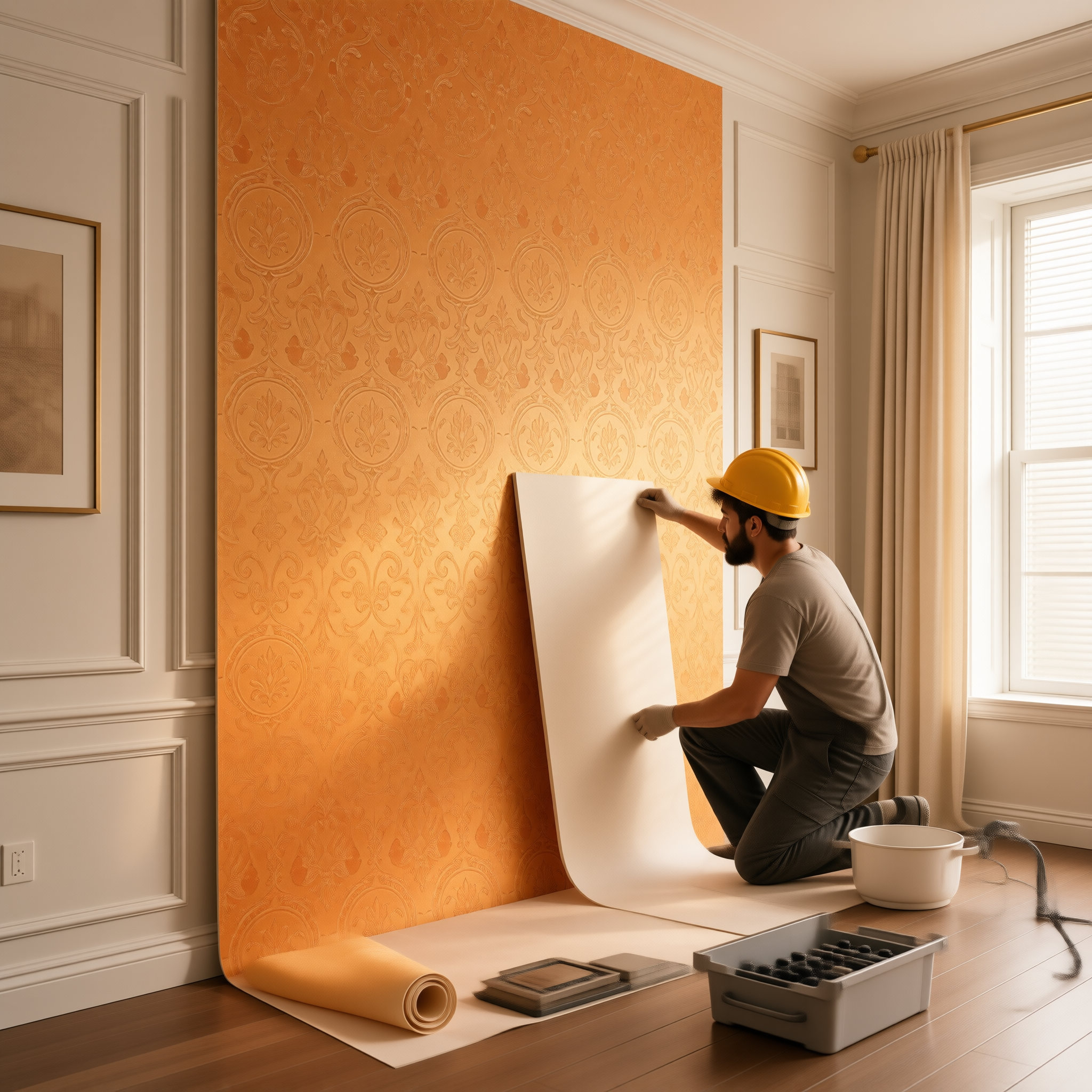
Wallpaper for textured walls can work, but only when texture, material, and wall preparation are matched correctly for a durable finish.
Yes, wallpaper for textured walls is possible, but only when the texture is light enough and the substrate is properly prepared. Light orange peel can often be covered after sanding and priming, while medium and heavy textures usually need leveling first.
The result depends on three variables: texture depth, wallpaper construction, and wall preparation. Smooth, sealed walls give the adhesive a predictable surface, while rough or uneven walls can cause poor bond strength, visible seams, and early edge lift.
Heavy texture is a preparation problem, not a wallpaper problem.
Key Takeaways
Light orange peel can often be papered after sanding, cleaning, and priming.
Knockdown, skip-trowel, and popcorn usually need skim coating or removal.
Thicker wallpaper helps with minor variation, but it does not hide deep texture.
Peel-and-stick wallpaper is the least forgiving option on textured walls.
Professional wall preparation matters more than wallpaper price or pattern choice.
Can You Put Wallpaper on Textured Walls? A Direct Answer
Yes, wallpaper for textured walls can be installed, but the wall must match the material and the prep level. Light texture may be workable; medium and heavy texture usually need correction first.
Texture creates peaks and valleys that change how paste or adhesive touches the wall. That uneven contact affects grip, seam alignment, and the final surface look, especially on large feature walls.
In practical projects, the safest approach is to test a small area before committing to a full room. A quick mockup on one wall often shows whether the texture can stay or must be leveled.
How Wall Texture Affects Adhesion, Seams, and Appearance
The most common failures are edge lifting, seam telegraphing, and a bumpy finished face. Texture can also make pattern matching look off even when the paper is hung straight.
Wall texture and wallpaper adhesion are linked through surface contact and absorption. High spots reduce contact area, while porous patches pull moisture unevenly from paste or adhesive.
Substrate smoothness strongly influences wallcovering adhesion and seam appearance. Major manufacturer installation sheets and industry wallcovering guidance consistently call for a smooth, sealed surface for reliable results.
Wall Texture Types Explained — From Light Orange Peel to Popcorn
Light Textures: Subtle Orange Peel and Fine Spray
Light orange peel texture is the easiest category to cover, and wallpaper on orange peel texture can sometimes work after light sanding and priming. Fine spray textures still show through if the wallpaper is thin.
These finishes have shallow peaks, so the wall can usually be improved without full resurfacing. The main goal is to knock down sharp points and seal the wall before hanging.
In residential bedrooms and hallways, a small test panel often confirms whether the texture is truly light. If the paper bridges the surface cleanly, the room may not need skim coating.
Medium Textures: Knockdown and Skip-Trowel
Wallpaper on knockdown texture is riskier, and skip-trowel is usually similar or worse. These finishes have flatter tops but deeper valleys, which often show through seams and edges.
The valleys matter more than the peaks. Even if the wall looks acceptable from across the room, the paper can settle into the low spots and reveal every joint line.
For hospitality corridors, restaurants, and retail feature walls, medium texture usually justifies a skim coat before wallpaper. That extra step reduces visual noise and improves long-term service life.
Heavy Textures: Popcorn and Deep Stipple
Wallpaper on popcorn walls is generally not a direct-install surface. Heavy stipple and popcorn finishes are too irregular for a clean bond and too rough for a refined finish.
The problem is structural, not cosmetic. Deep texture creates large voids under the paper, so the adhesive cannot support the face evenly across the wall.
In older properties, popcorn should also be evaluated carefully before any scraping or sanding begins. For commercial upgrades, the usual path is removal or a full skim coat rather than trying to paper over it.
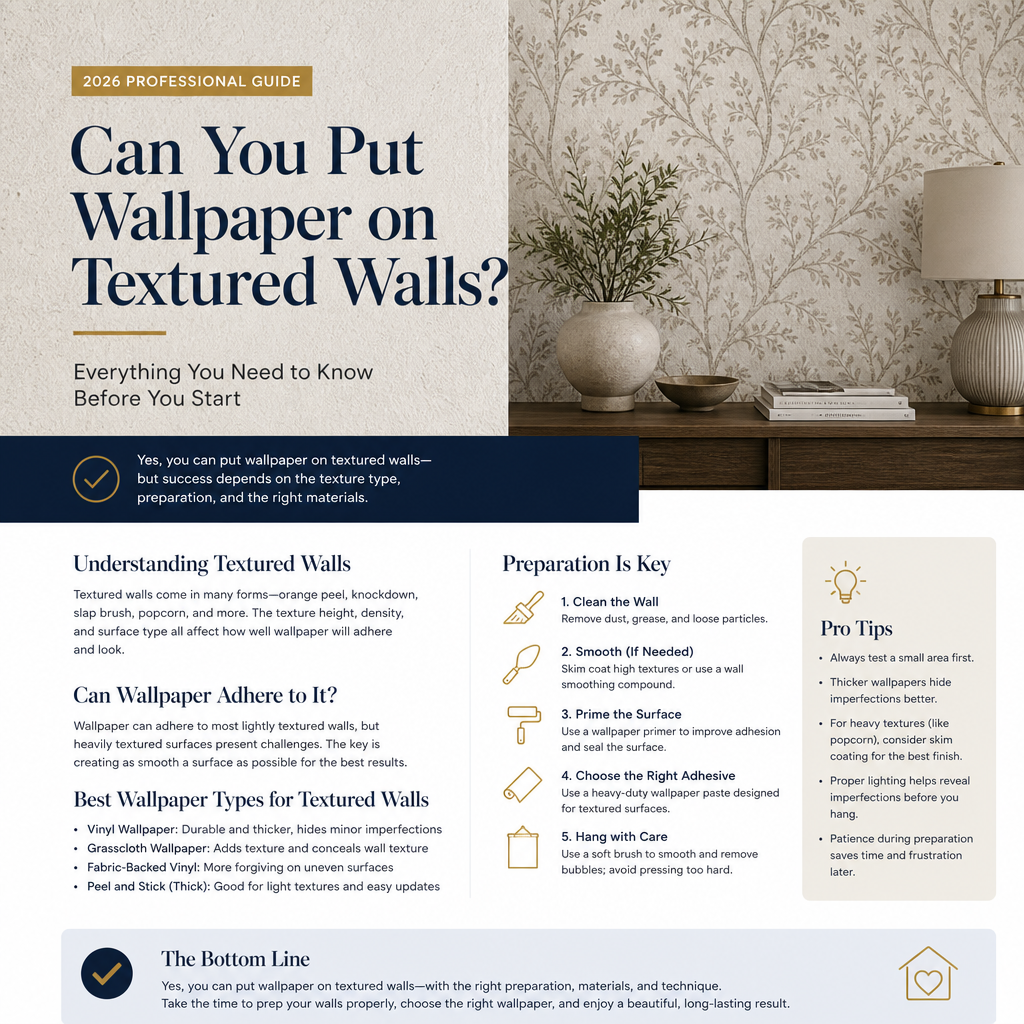
How to Prepare Textured Walls for Wallpaper: Methods and Tradeoffs
Assessment First: Identifying Texture Severity
Start by classifying the wall before choosing any product. A light orange peel wall may only need sanding and a primer for textured walls before wallpaper, while deeper finishes need leveling.
The wall preparation for wallpaper should follow the wall, not the catalog. If you can feel sharp ridges with your hand, assume the wall will show them through the finish.
In our sampling programs across multiple interior projects, walls that received only a sealing primer — without skim coating — frequently developed visible seam telegraphing within the first 12 months, particularly on knockdown and heavier orange-peel textures.
Mechanical Prep: Cleaning, Sanding, and Scraping
Clean the wall first, then sand high points and scrape loose material. Dust, paint nibs, and flaking compound all reduce bond quality and can telegraph through thin wallcoverings.
Mechanical prep is the fastest way to improve a marginal wall, but it has limits. It can soften texture, yet it cannot flatten deep valleys or fix patched drywall joints.
For occupied spaces, this step is often the least disruptive option. It is useful when downtime is short and the remaining texture is still shallow enough to manage.
Surface Leveling: Skim Coating and Drywall Mud
Use a skim coat before wallpaper when the wall has medium or heavy texture. A thin, even layer of joint compound can turn a rough wall into a printable surface.
Skim coating works by filling valleys and reducing contrast across the wall plane. That gives the adhesive a more uniform base and makes seams less visible after drying.
This step is common in higher-end residential remodels and most hospitality feature walls. It adds labor, but it is usually cheaper than replacing failed wallpaper later.
Priming and Lining Paper: Sealing the Substrate
After leveling, use a primer that is compatible with the wallcovering adhesive system. A sealed surface absorbs paste more evenly and reduces the risk of dry spots or over-wet areas.
Lining paper for wallpaper is a useful compromise when a perfect skim finish is not practical. It can help bridge minor variation, but it is not a substitute for true leveling on rough walls.
Wallcovering adhesives are engineered for specified substrate absorption ranges. Sealed, primed walls provide more consistent absorption, while raw textured substrates create uneven bond strength across the wall.
Skim coating is the most reliable way to turn a textured wall into a wallpaper-ready wall.
Wallpaper Materials Compared: Matching Paper to a Textured Surface
The right textured wallpaper or wallcovering can improve the result, but it will not erase a poor substrate. Thickness, backing, and flexibility matter more than pattern when the wall is not perfectly smooth.
Thicker materials usually tolerate minor variation better, while thin papers show every ridge more clearly. For reference, see the general wallcovering history and material categories overview for construction types and terminology.
The comparison below is most useful when the wall is already close to level. If the wall is rough, material choice becomes a secondary decision after preparation.

| Material | Best use on textured walls | Strength | Tradeoff |
|---|---|---|---|
| Vinyl | Minor surface variation | Durable and wipeable | Can look less forgiving on imperfect seams |
| Non-woven | Light to moderate texture after prep | Stable and easier to hang | Still needs a smooth substrate |
| Paper-backed | Very smooth walls only | Good print clarity | Shows texture and seam lines easily |
| Fabric-backed | Better for minor irregularity | Adds body and visual depth | Higher cost and more labor |
Choose vinyl if the room needs frequent cleaning and the wall is already close to level.
Choose non-woven if you want easier handling and moderate forgiveness after preparation.
Avoid thin paper-backed goods on rough walls unless the substrate has been fully leveled.
Choosing the Right Approach by Project Type
For wallpaper for commercial interiors, the right choice depends on traffic, cleaning needs, and how much downtime the site can absorb. Residential rooms can sometimes accept lighter prep, but hospitality and retail usually cannot.
When we specify custom wallcovering for hospitality and commercial interiors, we routinely flag substrate conditions in the project brief — texture severity, drywall finish level, and any patched or repaired areas — so the wallcovering spec accounts for actual surface conditions, not assumed ones.
Choose lighter prep only if the wall is already smooth enough to pass a close visual check. Choose skim coating and priming if the wall must look clean under bright light, repeated cleaning, or camera-heavy environments.
A residential bedroom may tolerate a small amount of texture, but a restaurant banquette wall or retail display wall usually cannot. The tradeoff is simple: less prep saves time now, but better prep protects the finish later.
Common Mistakes and Tradeoffs When Wallpapering Textured Walls
The most common mistake is assuming peel and stick wallpaper on textured walls will behave like a permanent wallcovering. It usually lifts at corners, especially where the wall has dust, ridges, or patch lines.
Pressure-sensitive adhesive needs continuous contact. Texture breaks that contact into small points, so the bond is weaker at seams, edges, and around outlets or trim.
Across restaurant and retail fit-outs we have observed that projects which planned substrate prep (skim coat + primer) before wallpaper specification consistently had cleaner seams and longer service life than projects where wallcovering was specified onto the existing surface without leveling.
A second mistake is choosing a pattern based on appearance alone. Bold prints can hide minor variation, but they do not solve adhesion problems or flatten a rough wall.
Check the wall in raking light before ordering materials. If shadows reveal ridges or patched areas, assume those flaws will still be visible after installation.
Frequently Asked Questions About Wallpaper on Textured Walls
- Can you put wallpaper on textured walls without skim coating?
- Only on very light texture. For medium or heavy texture, skipping leveling usually leads to telegraphing and weaker seams.
- What kind of wallpaper is best for textured walls?
- Thicker, more flexible materials such as non-woven or fabric-backed wallcoverings handle minor variation better than thin paper-backed products.
- Will peel and stick wallpaper work on textured walls?
- Not reliably for long-term use. It needs a smooth, sealed surface, and texture often causes edge lift within weeks or months.
- Can you wallpaper over orange peel texture?
- Light orange peel can often be papered after sanding and priming. Heavier orange peel usually needs skim coating first.
- Can you wallpaper over popcorn walls?
- Generally no. Popcorn is too rough for a clean finish and should usually be removed or fully skim-coated before wallpapering.
- Do I need lining paper if I have textured walls?
- Lining paper can help bridge minor texture, but it is a compromise. It is useful when full skim coating is not practical.
The best wallpaper for textured walls is the one installed on the best-prepared wall. If you want a finish that holds up in a home, hotel, restaurant, retail store, or office, start with the substrate and then choose the material.