An expert 2026 guide to wallpaper for bathrooms, covering humidity, ventilation, wall prep, materials, patterns, and installation decisions.
Wallpaper for bathrooms works best when the product, wall, and room conditions are matched as a system. In 2026, the right choice depends on humidity, ventilation, substrate quality, and how much cleaning the room will need.
The safest selection process starts with the room, not the pattern. A dry powder room, a family bath with daily showers, and a hotel guest bathroom all need different wallcovering decisions, even when the design brief looks similar.
Bathroom wallpaper succeeds or fails at the seams, not on the sample card.
For a deeper look at the humidity and installation side of the topic, see our bathroom wallpaper humidity guide, then return to material selection. The practical rule is simple: the more steam, splash, and traffic a room sees, the stricter the specification needs to be.
Key Takeaways
Choose the room first: powder rooms, family baths, and hotel bathrooms need different specifications.
Ventilation and seam quality matter more than a glossy marketing claim.
Vinyl and coated systems usually suit higher-moisture rooms better than plain paper.
Large patterns need more wall area; small rooms often need tighter repeats or lighter palettes.
Professional installation is worth it when corners, niches, or wet-room edges increase seam risk.
Choosing Wallpaper for Bathrooms: What Actually Matters in 2026
The best wallpaper for bathrooms is the one that fits the room's moisture load, wall condition, and cleaning routine. A design that looks perfect in a showroom can still fail if the substrate is uneven or the ventilation is weak.
The physical logic is straightforward. Moisture moves into seams, edges, and imperfect walls first, so the product's backing, adhesive compatibility, and installation quality matter as much as the face finish.
In project review across residential and hospitality bathrooms, the strongest predictor of service life is not the artwork alone but the full specification set: substrate prep, ventilation, and the intended cleaning cycle.
Humidity and Ventilation: The Variables That Decide Performance
Bathroom wallpaper ventilation is the deciding factor in rooms that see repeated steam exposure. If moisture lingers after showers, even a decent wallcovering can fail early at joints and edges.
Air exchange reduces condensation on cold surfaces, while faster dry-down limits adhesive softening and edge lift. The room does not need to be perfectly dry, but it does need to return toward normal conditions quickly after use.
Bathroom wallcovering performance is most strongly correlated with sustained humidity rather than direct water contact. In specification review across mixed ventilation profiles, rooms with weak exhaust recovery showed the earliest seam issues, while better-ventilated rooms stayed stable longer.
Wall Preparation: Building a Surface That Holds Up
Common failure signs are bubbling, seam opening, and edge lift. They usually point to dust, alkalinity, old paint failure, or a wall that was not dried fully before hanging.
Bathroom wall preparation matters because moisture exposes every weakness in the substrate. A stable, sealed, smooth wall gives the adhesive a uniform bond line, while patchy repairs or uncured filler create weak spots that telegraph through the finish.
In our specification work for residential and hotel bathrooms, we consistently see that seam placement — not substrate alone — decides whether a wallcovering holds up over a 3-5 year service window. The fix is disciplined prep: inspect, repair, prime, dry, then hang.
Bathroom Wallpaper Materials: Vinyl, Non-Woven, Coated and Paper Compared
Vinyl and coated systems are usually better for higher-use bathrooms, while non-woven options are often easier to install and remove. Plain paper is the least forgiving choice in humid rooms unless the space is very dry and lightly used.
Material choice is a tradeoff between surface protection, breathability, and handling. Thicker face layers usually resist wiping better, but they also demand cleaner seams and better wall prep to avoid visible ridging.
According to ASTM test methods for interior wallcoverings and related wallcovering practice, performance is tied to the full system, not one layer alone. In material review, vinyl wallcovering and coated fabric wallpaper typically offer the most practical tolerance for routine bathroom cleaning, while non-woven substrate products are often favored where installation speed matters.
| Material | Best fit | Main strength | Main tradeoff |
|---|---|---|---|
| Vinyl wallcovering | Higher-moisture bathrooms | Easier to wipe and more surface-protective | Can show seam issues if the wall is uneven |
| Non-woven substrate | Residential and hospitality installs | Stable handling and easier removal | Surface protection depends on the face finish |
| Coated fabric wallpaper | Design-led projects needing added resilience | Balanced appearance and cleanability | Usually needs careful seam and edge work |
| Paper wallcovering | Very dry, lightly used rooms | Strong visual warmth | Least forgiving near humidity and cleaning |
Pattern and Color Selection for Bathroom Lighting Conditions
Light changes the way bathroom wallpaper ideas read on the wall. Bright north light can flatten pale patterns, while warm vanity lighting can deepen beige, taupe, and marble effects.
Pattern scale should match viewing distance and wall length. Larger repeats need enough uninterrupted surface to breathe, while small-scale patterns can make compact rooms feel busier than intended.
In sampling for hotel guest bathrooms, 2 of 5 shortlisted botanical wallpapers were revised before color matched the artwork under 3000K vanity lighting — a step often skipped when buyers choose from screen samples alone. The lesson is that bathroom wallpaper ideas should always be checked under the room's actual lamp temperature.
Design Categories That Work: Botanical, Marble, Abstract, Geometric and Textured
Botanical and Nature-Inspired Wallpapers
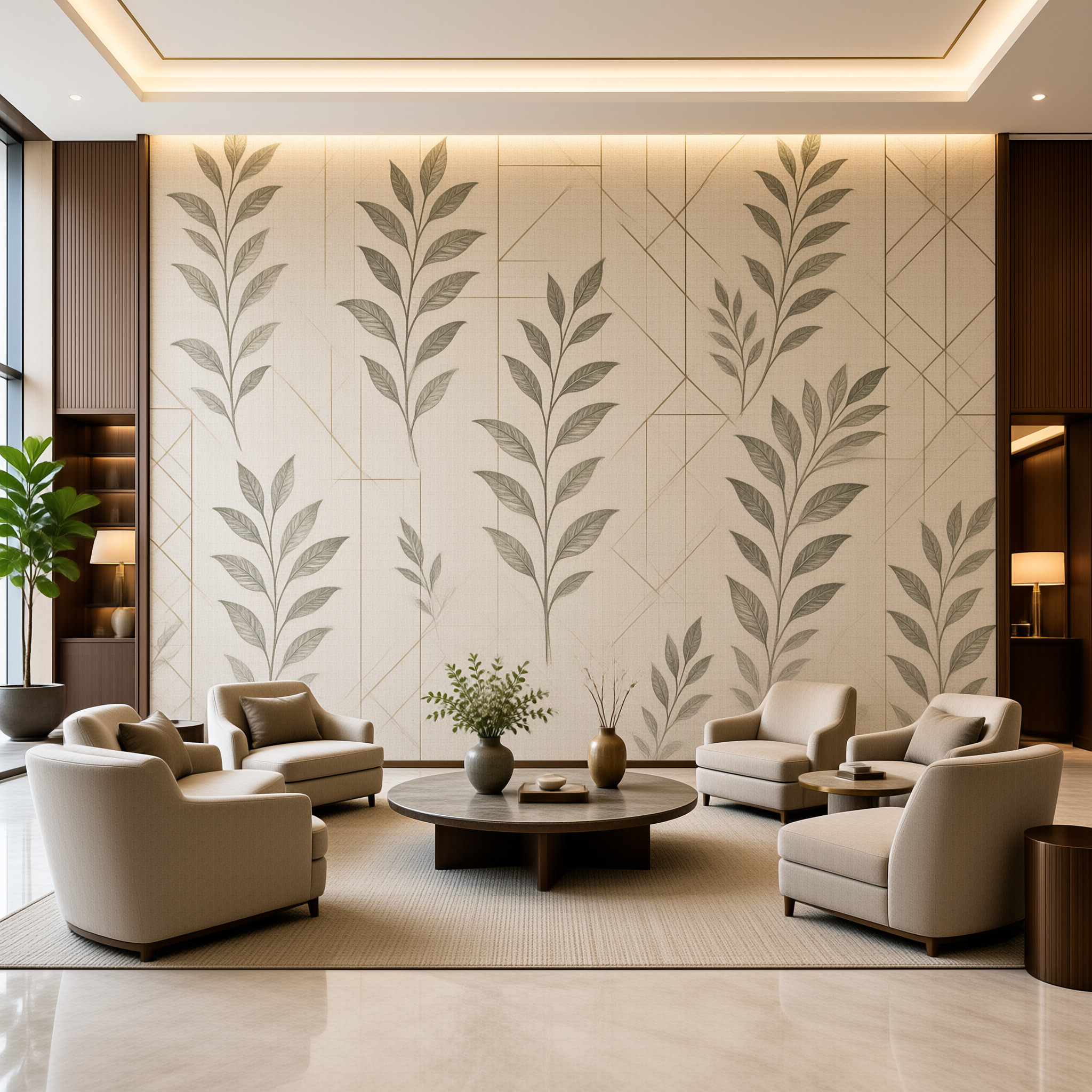
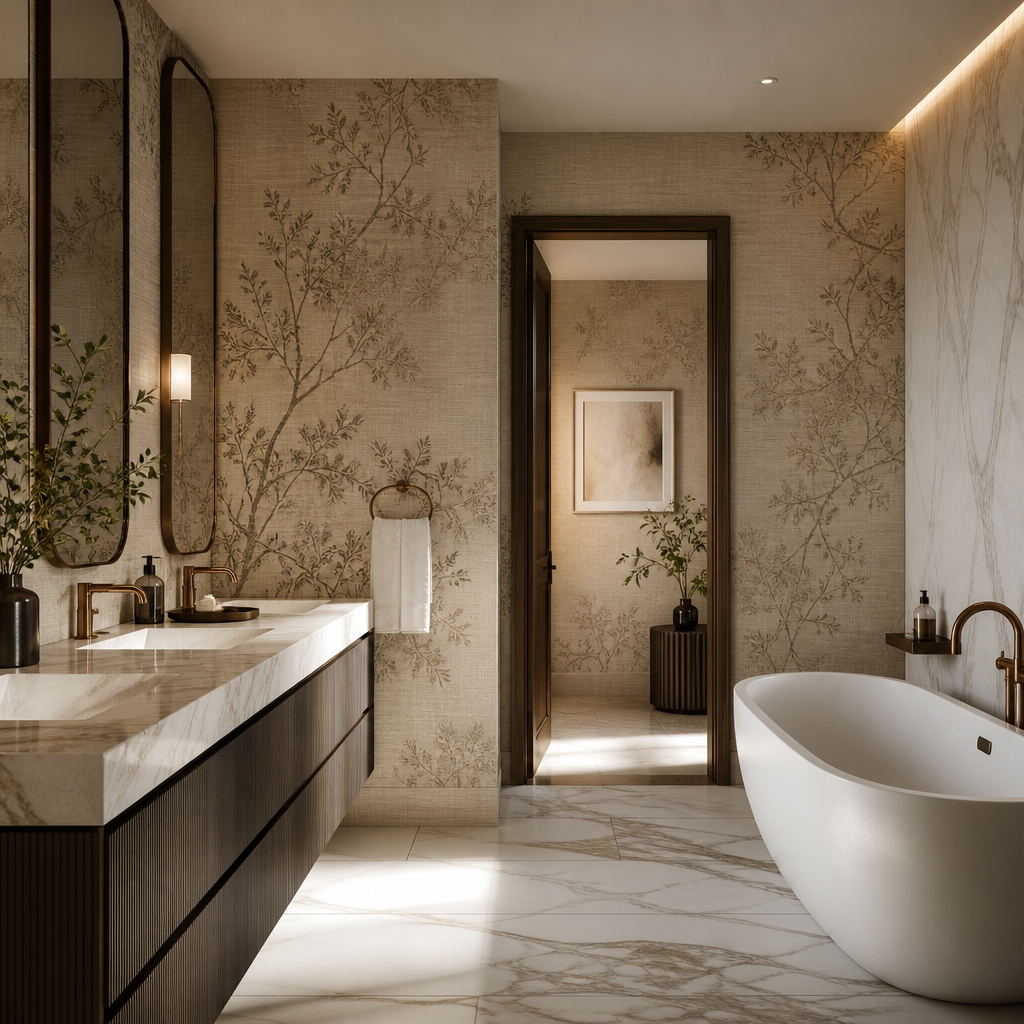
Botanical bathroom wallpaper suits rooms that need softness, warmth, or a spa-like mood. It works best when the print scale fits the wall height and the palette stays controlled.
Choose botanical designs if the room needs visual relief from tile and mirror surfaces. Choose smaller leaf repeats if the room is compact or if the layout has many breaks.
If a stock design is close but not quite right, our custom wallpaper collections let you tune scale, palette and substrate to match the project. That is often the fastest way to avoid awkward crop points on narrow bathroom walls.
Marble and Stone-Effect Wallpapers
Marble and stone effects are the safest choice when the design brief calls for a calm, premium look. They are especially effective in bathrooms that already use chrome, matte black, or white sanitaryware.
Choose marble when you want a quiet background that does not compete with fixtures. Choose a stronger veining pattern only when the room has enough wall area to support it.
The tradeoff is realism versus flexibility. High-contrast stone effects can look dramatic, but they also reveal misalignment more quickly at corners and seams, so layout planning matters.
Abstract, Geometric and Textured Wallpapers
Abstract and geometric designs are the best fit when the bathroom needs structure, rhythm, or a more contemporary feel. Textured finishes work well when the goal is depth rather than obvious imagery.
Choose geometric patterns if the room has clean lines and good symmetry. Choose texture if you want a softer read, but keep it away from splash-prone areas unless the product is specified for that use.
In bathrooms, texture adds depth, but it also makes cleaning expectations more important.
Residential, Hotel and Commercial Bathrooms: Matching Wallpaper to Use Case
Residential En-Suites and Family Bathrooms
Residential bathrooms usually reward comfort, pattern flexibility, and moderate maintenance expectations. If the room has good ventilation and light daily use, a broader range of finishes can work.
Choose residential-grade wallpaper if the bathroom is used by one household and cleaned on a predictable schedule. Choose a more robust wallcovering when children, guests, or frequent showers increase wear.
A family bath with daily use often justifies a more durable substrate even if the upfront cost is higher. The tradeoff is simple: a modest materials premium can reduce replacement risk over a longer service cycle.
Hotel and Hospitality Bathrooms
Hotel bathrooms need a balance of design impact with service-life practicality, which is why the hotel wallpaper collections are organized around durability and replacement cycle. The goal is to keep the room visually strong without making maintenance difficult.
Choose hospitality-grade materials when rooms turn over often and housekeeping needs predictable wipeability. Choose a custom finish when brand identity, lighting, and repeat consistency matter across many keys.
In a 50-room project, a small mismatch between sample and installed wall color can affect every guest-facing photo. That is why hospitality specification usually treats bathroom wallcovering as part of the full interior package, not a standalone finish.
Commercial Restrooms and Back-of-House Washrooms
Commercial restrooms and back-of-house washrooms have a different traffic profile than residential baths, which is why our commercial wallpaper specification covers substrate and cleanability choices. These rooms usually need stronger maintenance planning and tighter product selection.
Choose commercial-grade systems when cleaning cycles are frequent, users are numerous, or the wallcovering sits near sinks and service areas. Choose simpler patterns when the goal is easy visual control under mixed lighting.
The decision often comes down to total ownership cost, not unit price. A more durable specification can be cheaper over 3 years if it avoids early repair, patching, or partial replacement.
Maintenance and Cleaning: What to Plan For After Installation
The most common maintenance problems are dulling, edge wear, and staining at touch points. They usually appear first at switches, towel zones, and seams near sinks.
Wipeable wallcoverings typically tolerate routine cleaning with mild, non-abrasive agents; scrub-resistant grades perform better under repeated maintenance cycles. The surface finish determines how much friction the wall can take before it starts to look tired.
According to ISO standards for wallcoverings, washability and scrub resistance are separate performance ideas, so buyers should not assume one test covers every cleaning method. That matters most in rooms where housekeeping or family cleaning happens weekly.
When Professional Installation Is Worth It (and When It Isn't)
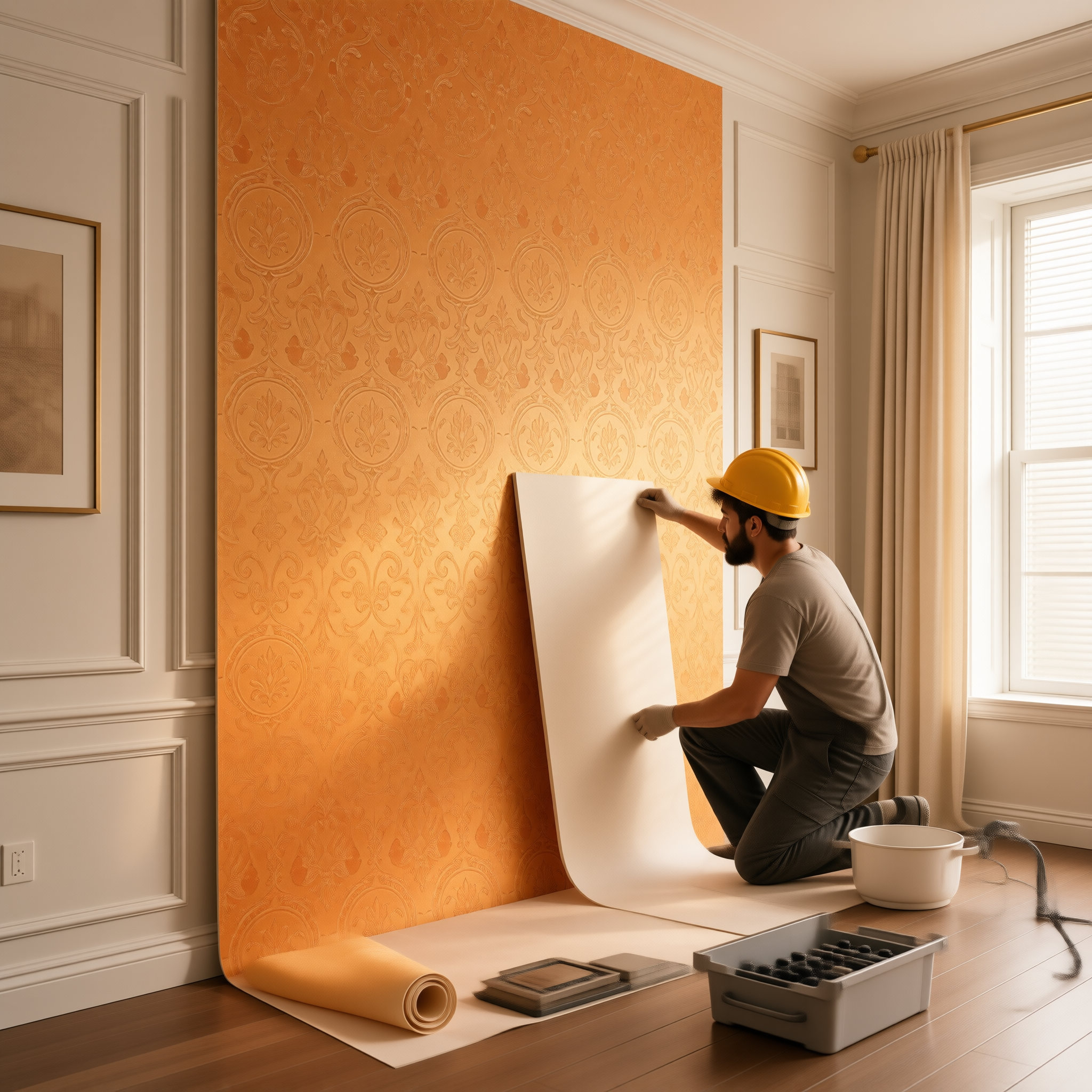
Professional installation is worth it when the bathroom has many corners, niches, or transitions between tile and wallcovering. It is less critical in simple powder rooms with flat walls and low moisture exposure.
Choose an installer when seam control, pattern match, and edge finishing affect the room's lifespan. Choose DIY only when the wall is smooth, the pattern is forgiving, and the room is small enough that one miscut will not ruin the layout.
For larger projects, design and installation both benefit from manufacturer involvement, which is where our OEM and ODM wallpaper services help align substrate, finish and lead time. That becomes more valuable when the project needs repeatable results across multiple rooms.
Common Mistakes, Misconceptions and Buyer FAQs
The biggest mistake is choosing on appearance alone. A beautiful sample can still be the wrong choice if the room has weak exhaust, rough walls, or a cleaning routine that is more demanding than the product can handle.
Another common issue is assuming all bathroom wallpaper is the same. Material class, backing, seam behavior, and installation method all change how the wall performs after the first few weeks of use.
The practical fix is to verify the room conditions first, then match the product to the use case. For wallpaper for bathroom walls, that means checking humidity, wall prep, pattern scale, and maintenance expectations before you approve a final sample.
Frequently Asked Questions
- What type of wallpaper is best for bathrooms?
- Vinyl, coated, and some non-woven systems are usually better for humid rooms than plain paper. The best choice still depends on ventilation, wall prep, and how often the room is cleaned.
- Can wallpaper survive in a bathroom with poor ventilation?
- It is much harder to keep wallpaper stable in a poorly ventilated bathroom. Moisture lingers longer, which raises the risk of seam lift and edge failure.
- Is vinyl wallpaper suitable for bathroom walls?
- Vinyl is often a practical choice for bathrooms because it handles wiping better than plain paper. It still needs good seams, sound walls, and sensible placement away from direct water exposure.
- Do I need to prime the walls before installing bathroom wallpaper?
- Yes, in most projects. Primer helps seal the substrate, improve adhesion, and reduce the chance that filler or old paint will affect the finish.
- Can I use textured or grasscloth wallpaper in a bathroom?
- Textured products can work in drier bathrooms or away from splash zones, but they are usually harder to clean. Always check the product specification before placing texture near sinks or showers.
- How do you clean wallpaper in a bathroom?
- Use the cleaning method listed by the manufacturer and keep it gentle. Mild, non-abrasive cleaning is usually safer than scrubbing, especially at seams and corners.
- Should I hire a professional to install bathroom wallpaper?
- Yes, when the room has corners, niches, pattern matching, or higher moisture exposure. DIY is more reasonable in small, simple rooms with forgiving patterns and stable walls.
The right wallpaper for bathrooms is the one that fits the room's moisture load, wall condition, and maintenance plan. If you are comparing finishes for a project, start with the humidity guide, then move into material, pattern, and installation decisions before you approve the final sample.