Use this wallpaper quality control checklist to verify colour, texture, dimensions, labels and documents before your custom order ships.
A wallpaper quality control checklist only earns its keep at the factory gate. Run it after the rolls are finished and before the container is sealed, because that is the last point where a factory can still reprint a bad batch at normal cost. Done properly, it catches colour shifts, dimension errors and label mistakes while the goods are still on the manufacturer's floor.
Key Takeaways
Inspect the shipment, not the first roll. One order often spans several production batches.
Compare only against the signed physical sample. Screen proofs and PDFs cannot settle a colour dispute.
Record findings by roll and batch number so corrective action stays specific and fast.
Agree the defect tolerance and disposition route in writing before bulk production starts.
Why Pre-Shipment Wallpaper Quality Inspection Matters
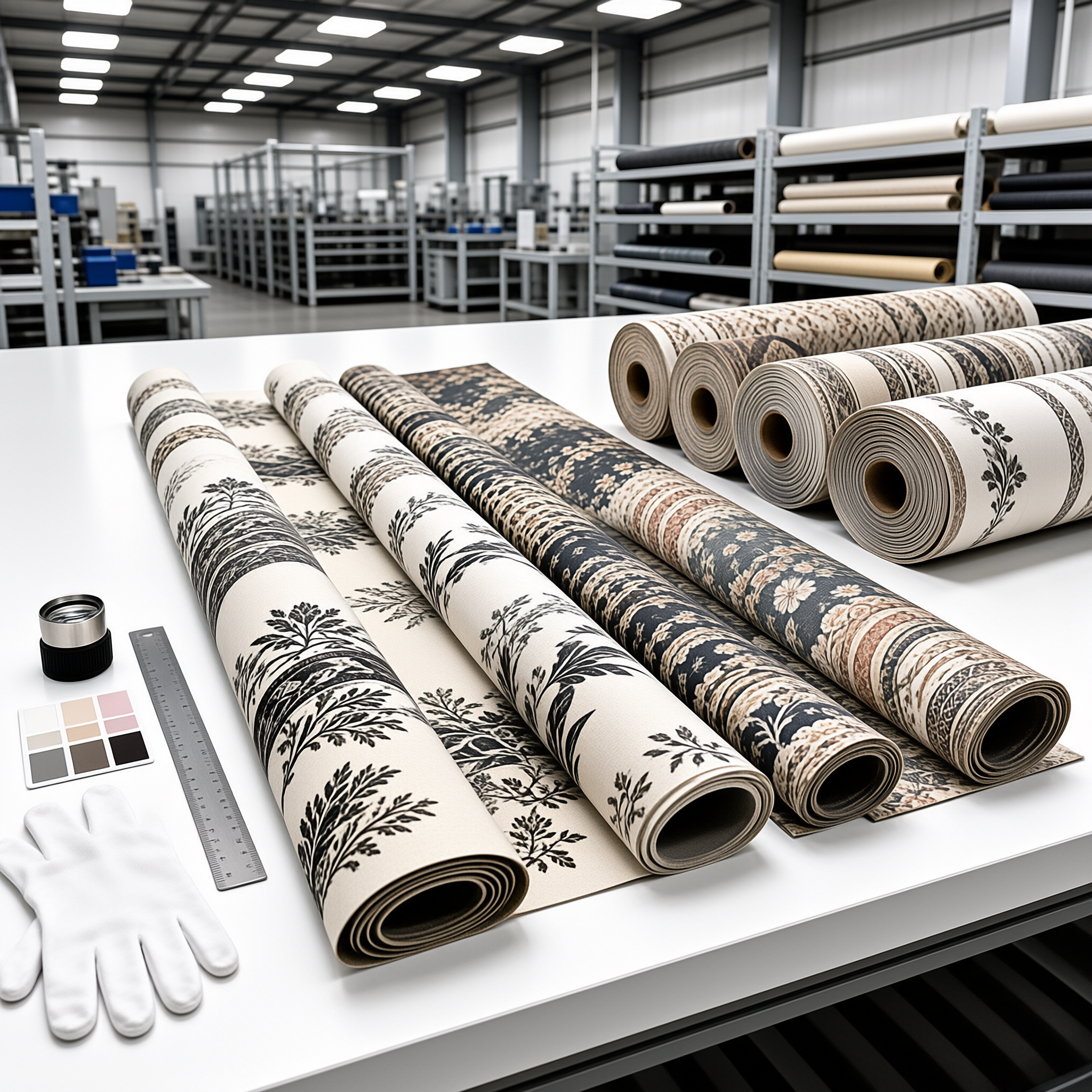
Custom wallpaper is produced to a project. The pattern, the colour, the panel dimensions and the installation date are all fixed before the first metre is printed. A deviation caught at the factory can go back into the production queue. The same deviation found on site turns into a schedule problem, extra labour and a commercial argument. That gap in cost is the whole case for inspecting before dispatch.
In most projects, a single order runs across more than one production batch, so the first roll you open tells you almost nothing about the rest of the pallet. Treat the shipment as the unit of inspection. Hotel and hospitality orders make this sharper, because a corridor or a full floor of rooms has to look continuous. For context on how those projects are specified, see this guide to commercial wallcovering for hotels.
Freight timing matters as much as quality. Once the goods have left, remedies are slow, expensive and often depend on goodwill. While they sit at the factory, you still hold the payment and the deadline.
An approved inspection note with dated photographs also becomes the reference document for installation handover and any later claim. That is the difference between a wallpaper quality control checklist used as a working record and one used as a tick-box exercise.
Check Colour Consistency Across Wallpaper Rolls
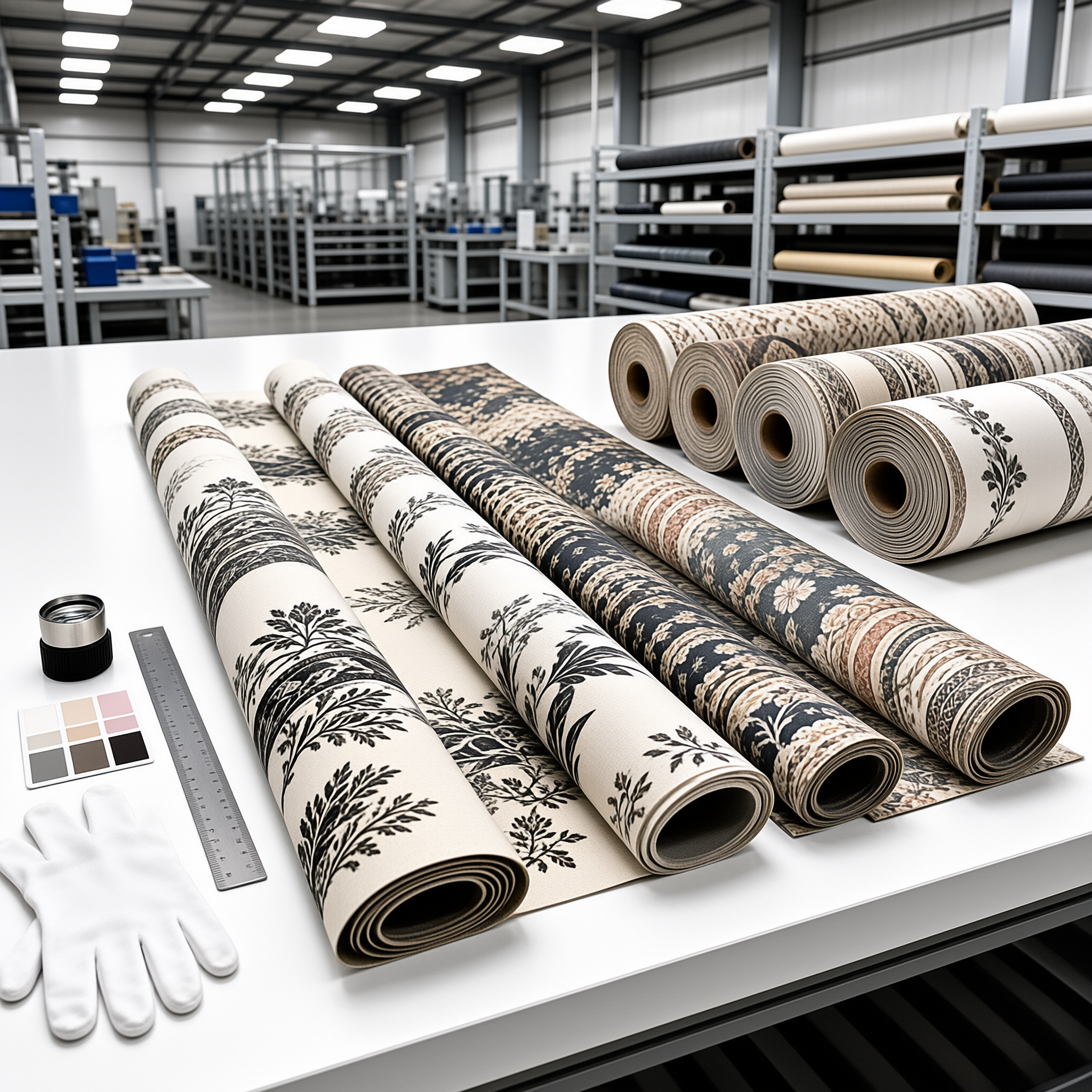
Compare every roll against the approved physical sample. Not a screen proof, not a PDF, not a photo taken on a phone. The physical sample is the only artefact both sides have signed and dated, which makes it the only reference that survives a dispute.
Do the comparison twice. First in a controlled area with neutral light, then under the lighting type closest to the installation. Warm LED corridor lighting will reveal shifts that neutral light hides, and hotel corridors are lit warm more often than not. Note any visible difference under either condition, and note which condition produced it.
Judge the same pattern location on each roll, for example the same motif repeat in the middle of the width. Avoid judging colour at the roll edges, where handling and coating differences are common. Some variation between production batches is a normal characteristic of printing. What matters is whether it is visible against the sample and whether the project can tolerate it, so agree the tolerance in writing before bulk production begins.
A colour match judged on a different surface finish is not a colour match, because finish changes how light leaves the surface.
Record the roll and batch number of any off-shade roll. 'Roll 14 of batch B' is actionable. 'Some rolls look different' gives the factory nothing to work with.
Inspect Surface Texture and Printing Quality
Inspect in two passes. The first is a normal reading-distance pass for pattern and overall colour impression, done across the full width. The second is a close pass under raking light, looking for streaks, banding, uneven ink coverage, misregistration, missing detail and coating smears. Raking light is what makes a faint print defect visible before a client sees it on a wall.
Check handling damage at the roll ends and the outer layer, then unroll far enough to inspect material that has never been exposed. The outer metre is not representative of the roll. Confirm emboss and texture are consistent across the full width and from roll to roll. A pattern that is crisp on one roll and flattened on another will read as two different products on the same wall.
| Defect category | What it looks like | Usual disposition |
|---|---|---|
| Printing | Streaks, banding, misregistration, uneven ink | Reprint the affected rolls from the same batch |
| Coating or emboss | Smears, patchy gloss, flattened texture | Review by batch, since cause is usually process-wide |
| Handling | Edge crush, scuffs, marks on the outer layer | Replace affected rolls and review packing method |
Keep the categories separate when you write the report. They have different causes and different remedies, and mixing them makes it harder for the manufacturer to trace the fault to a machine, an ink batch or a packing table.
Verify Dimensions, Roll Length and Pattern Repeat
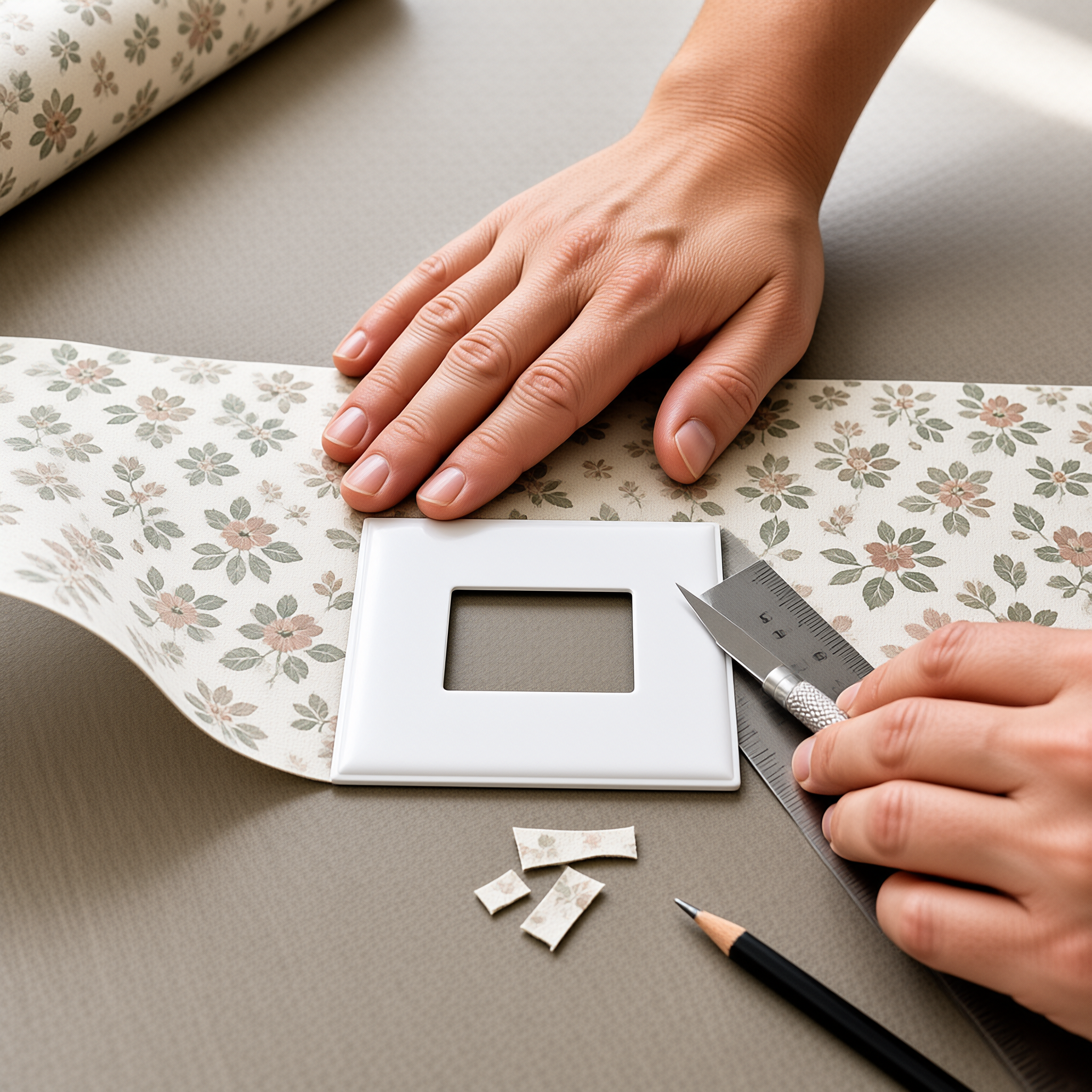
Measure roll or panel width at several points along the length rather than once. Confirm total length per roll and total usable material against the order. For custom panels, verify finished width and height, and check that the trimming allowance agreed in the specification is actually present. That allowance is not waste, it is what lets the installer square the panel on site.
Verify the pattern repeat distance and, more importantly, that the repeat matches across consecutive panels so seams align at eye level. A single correctly printed panel proves nothing about a run. Ask the factory to lay three consecutive panels side by side and photograph the seams. That one photograph answers the question no single-panel check can.
Check Material and Surface Finish
Compare the substrate against the approved sample: type (non-woven, vinyl, paper-backed or otherwise), weight and handling feel, backing appearance and dimensional stability. Then confirm the finish. Emboss depth and definition, matte or satin level, metallic effect and coating uniformity all need to match, because finish changes perceived colour.
Check the material against the wording of the purchase order, including article reference, backing, thickness and finish, rather than against the pattern name alone. A pattern may be available on more than one construction, and the pattern name does not tell you which one you received. If the sample and the order documents use different naming conventions, ask the manufacturer to confirm in writing which construction was produced. You can review available constructions in the custom wallpaper and commercial wallcovering collections.
Review Packaging, Labels and Roll Identification
Check outer wrap, core and end protection, plus moisture protection suited to the shipping method. Sea freight condensation is a real risk for paper-based material, and a shipment that arrives with wavy edges is a quality claim even if the printing was perfect.
Labels should carry pattern name or code, colour code, batch identification, roll number, dimensions and the order or PO reference. Without batch and roll numbers, batch control during installation is impossible. Confirm rolls from the same batch are grouped and identified so installers can keep one batch within one room or one continuous wall run.
Review Testing Reports and Project Documentation
Match every document to the exact article being supplied: product name or code, construction, backing and thickness. A report for a similar product in the same range is not evidence for this one. Check the report date, the test method and the stated scope, and write down what the document does not cover instead of assuming it covers everything the project needs.
Fire performance and destination-market requirements need the same discipline. Ask for the specific report the specifier is relying on, and confirm the standard, the method, the classification achieved and the article it applies to. Requirements differ by market and by building type, so the document set should be confirmed with the specifier, not guessed from a brochure. VELORA publishes its available documentation through wallpaper testing reports and product compliance.
Final Pre-Shipment Wallpaper Quality Control Checklist
Confirm product type, article code and construction on the labels match the purchase order.
Compare every roll to the approved physical sample under neutral light and under installation-style light.
Check colour across rolls and record any off-shade roll with its batch and roll number.
Inspect for streaks, banding, misregistration, coating smears and handling damage on both passes.
Measure roll or panel width at several points and confirm total length per roll.
Verify pattern repeat distance and alignment across three consecutive panels.
Measure finished panel height against the specified dimension, trimming allowance included.
Check packaging, end protection and moisture barrier against the shipping method.
Reconcile roll count, panel count and spare allowance against the packing list.
Confirm which test reports apply to the article being shipped and request anything missing.
What Should Buyers Do If a Quality Problem Is Found?
Document before you discuss. Photograph the defect with the roll label in frame, note the roll and batch number, and describe where on the roll it sits: outer layer, mid-roll, or across the full width. A close-up plus a wider shot showing the label is enough to settle most questions without a second inspection.
Then send a written deviation notice. State the finding, the quantity affected, the clause or specification it conflicts with, and the disposition you want: replace, reprint, price adjustment or acceptance with a note. Ask for written confirmation of the agreed action before dispatch. Set a deadline that works with the vessel cut-off, and agree who carries the cost of any re-inspection.
Verbally reported defects tend to reappear as disputes months later. A short written record, sent while the goods are still at the factory, keeps the corrective action inside the production schedule where it is affordable.
How VELORA Approaches Wallpaper Quality Control
VELORA is a custom wallpaper manufacturer and B2B project supplier. Production starts from raw material selection, then moves into monitored printing with colour and surface checks taken during the run rather than only at the end. Finishing inspection, final quality checks and packaging follow, and each order is coordinated against its delivery schedule.
For project and custom orders, the approved physical sample is the reference point for the run, and the order documents record construction, backing, thickness and finish. Buyers who need pattern development, sampling or project-based production can review the custom wallpaper OEM and ODM service. If you are still comparing factory set-ups, this B2B guide to wallpaper OEM services covers what brands and distributors usually ask before committing. We will tell you what our documentation covers for a given article rather than assume it applies to everything in a range.
Conclusion: Make Wallpaper Quality Checks Before Shipping Routine
Wallpaper quality checks before shipping are cheapest when they are routine rather than reactive. Confirm the material specification, approve a physical sample, agree the colour tolerance and the pattern match standard, and tell the manufacturer in advance how you want deviations reported. Then work the wallpaper quality control checklist through the whole shipment, roll by roll and panel by panel, while the goods can still be corrected.
International B2B buyers are welcome to contact VELORA for custom wallpaper samples, project specifications and manufacturing quotations. Send your pattern brief, panel schedule and target installation date, and we will confirm the production route and the inspection points before bulk production begins.
Frequently Asked Questions
- What should buyers check before wallpaper shipment?
- Check colour against the approved physical sample, printing and surface quality, dimensions and pattern repeat, packaging and roll labels, quantity against the packing list, and which test reports apply to the article being shipped.
- How can buyers identify colour differences between wallpaper rolls?
- Line up the same pattern location on each roll against the approved sample under neutral light, then repeat under lighting close to the installation. Compare rolls within and across batches, and record any difference by roll and batch number.
- Why should wallpaper be checked against an approved sample?
- The physical sample is the only reference both parties have signed and dated. Screen proofs and photographs vary by device and lighting, so they cannot settle a colour or finish question once the goods are in transit.
- How can buyers verify custom wallpaper dimensions?
- Measure panel width at several points, confirm finished height against the specification, check the trimming allowance is present, and verify the pattern repeat aligns across three consecutive panels placed side by side.
- What documents should accompany commercial wallpaper orders?
- Expect a packing list, roll and batch identification, and the test reports the project specifies, each naming the exact article, construction, backing and thickness. Confirm report dates, methods and scope rather than assuming coverage.
- Can wallpaper quality problems be corrected before shipment?
- Often yes, if the deviation is documented early enough. Reprints, replacements and packing changes are all possible while goods sit at the factory, which is why the inspection should finish well before the vessel cut-off.