A practical B2B guide to wallpaper OEM services — OEM vs ODM, customization scope, production workflow, supplier evaluation, sampling and quotation prep.
Wallpaper OEM services allow brands, distributors and project buyers to develop wallcovering products according to specific design, material, color, dimension and branding requirements. Depending on the project, the cooperation may include artwork development or adjustment, sampling, production, packaging and cross-border delivery.
That model separates design ownership from manufacturing capacity. The buyer keeps the brand and the artwork; the supplier carries the printing equipment, ink systems and substrate sourcing. A seasonal collection can therefore launch without capital investment in production.
Wallpaper OEM services separate design ownership from manufacturing capacity — the buyer keeps the brand, the supplier carries the equipment.
Key Takeaways
OEM means the buyer owns the finished artwork; ODM means the manufacturer develops the pattern.
Pilot runs under 1,000 rolls typically cost 20-35% more per roll than standard production batches.
Physical strike-off samples catch colour drift that on-screen proofs cannot reveal.
Confirm MOQ, substrate and fire performance per project — they vary by print method, not supplier preference.
What Are Wallpaper OEM Services and How Do They Work
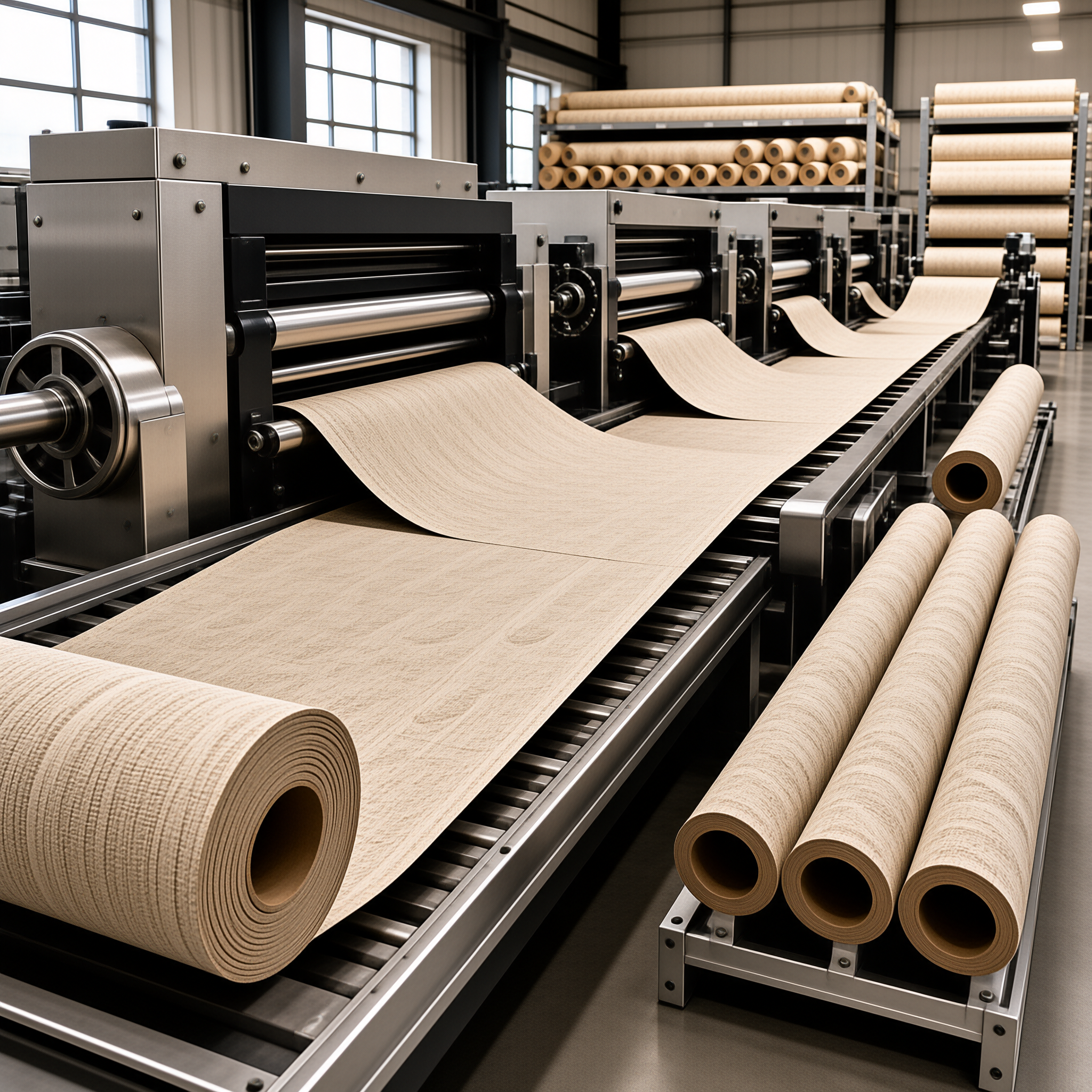
Wallpaper OEM services cover the complete production of wallcovering to a buyer's specification: artwork reproduction, substrate selection, printing, quality control, packaging and export delivery, all issued under the buyer's brand.
The model works because printing capacity, ink systems and substrate sourcing are the capital-heavy parts of wallcovering production. Design and distribution are the parts a brand already owns, so splitting the two keeps the buyer's balance sheet light while keeping the manufacturer's equipment utilized.
A single OEM order usually resolves three decisions — substrate, print method and packaging format. Rotary screen, gravure and digital printing each carry different plate or cylinder costs, so identical artwork can produce a materially different unit price depending on run length and pattern repeat.
Wallpaper OEM vs ODM: Which Model Fits Your Brand
OEM gives the buyer design authorship and the intellectual property that comes with it. ODM lets the manufacturer supply the pattern and the buyer brand it. OEM suits established visual identities; ODM suits fast market entry.
Under OEM, buyer artwork defines everything downstream — repeat size, colour separation, cylinder engineering — so production cannot start without approved files. Under ODM, the manufacturer amortizes an existing pattern across several buyers, which removes pattern development from the buyer's critical path.
Design control carries a time cost.OEM projects may require additional time for artwork review, customization and sample confirmation, while ODM projects based on existing designs may involve a shorter development process. Actual timelines depend on the design, material, customization scope, order requirements and production schedule. The tradeoff is authorship:Design ownership and exclusivity should be confirmed with the manufacturer before an ODM project begins., so two brands may sell visually similar collections.
| Dimension | OEM — buyer's design | ODM — supplier's design |
|---|---|---|
| Design ownership | Buyer | Manufacturer |
| Exclusivity | Can be exclusive | Often shared |
| Time to first sample | 2-3 weeks | Days |
| Main setup cost | Cylinder engraving, colour separation | Amortized pattern library |
| Best fit | Signature collections, strong brand identity | Market testing, fast category entry |
| Main risk | Design cost sunk if the collection underperforms | Limited differentiation |
OEM buys exclusivity with time; ODM buys speed with a shared pattern.
Choose OEM if the collection must be unmistakably yours. Choose ODM if speed to shelf matters more than exclusivity.
What Can Be Customized: Patterns, Materials, Sizes and Private Label Options
Customization in OEM production usually runs across five dimensions: pattern, colourway, substrate, dimension and packaging. A custom wallpaper manufacturer can vary any of them independently, though each change carries its own tooling or lead-time consequence.
Patterns, Colorways and Surface Finishes
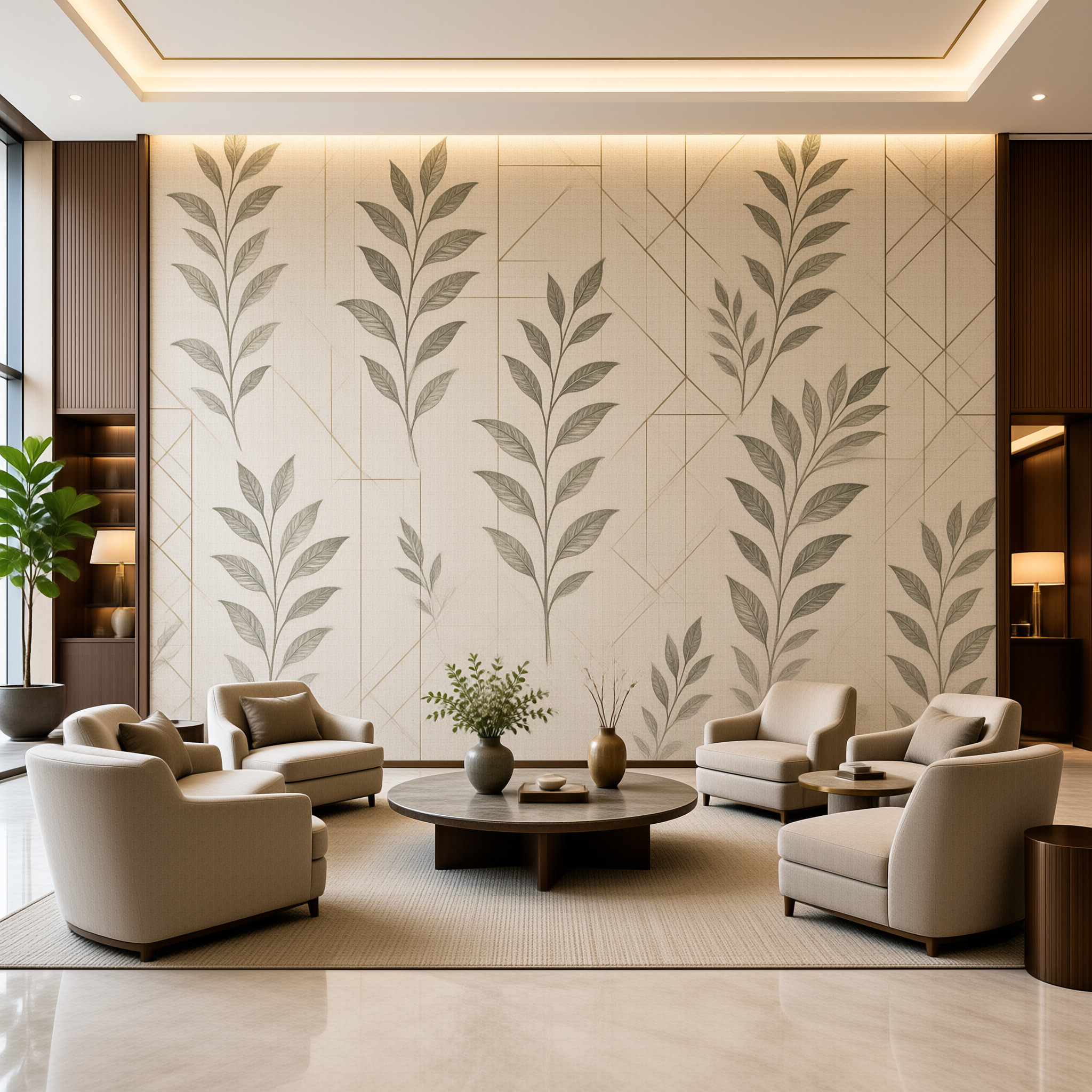
Pattern customization can begin with buyer-provided artwork, design references or specific visual requirements. Before sampling, the artwork, pattern scale, repeat, color direction and intended wall dimensions should be reviewed and confirmed according to the project requirements.
Colourways are matched under controlled lighting rather than on a monitor. Surface finishes — matte, satin, embossed, metallic or textured — are applied after printing, so a finish change does not require new artwork but does extend the sample cycle.
Substrates, Dimensions and Performance Properties
Substrate choice drives durability, installation behaviour and fire performance. Material selection should be based on the intended application, desired appearance, surface texture, installation requirements and relevant project specifications. For hospitality and commercial projects, buyers should communicate the intended environment and any required performance criteria before confirming the material.
Roll widths and lengths are usually standardized, but cut lengths and panel formats can be adjusted. Confirm actual wall width and pattern repeat before quoting — a repeat mismatch wastes more material than any print cost.
Private Label Packaging and Brand-Specific Inserts
Private label packaging is where OEM stops being purely a print job. Typical deliverables include branded hangtags, barcode labels, insert sheets with installation notes, and outer cartons carrying the buyer's own identity.
Packaging changes the shipping profile. Packaging requirements should be confirmed before production because labeling, roll identification, private-label elements and shipping preparation may vary by buyer and project.
Inside the Wallpaper OEM Process: From Inquiry to Cross-Border Delivery
A standard project moves through nine stages: inquiry, requirement review, artwork confirmation, material selection, sampling, sample confirmation, bulk production and QC, packaging, then cross-border delivery.
Each stage exists as a gate because errors grow more expensive downstream. Each stage acts as a confirmation point. Identifying design, color, material or dimension issues during the sampling stage can reduce the risk of changes after bulk production has started.
Timelines vary by print method and finishing. Sampling and bulk production timelines vary according to the design, material, quantity, customization requirements and production schedule. Buyers should confirm the project timeline before placing an order.and ocean freight adds transit time on top. Buyers planning a seasonal launch should count backwards from the installation date, not the order date.
Inquiry — share artwork, substrate preference, target quantity and application scenario.
Requirement review — the manufacturer confirms print method, repeat size and feasibility.
Artwork and design confirmation — files are checked for resolution, repeat and colour separation.
Material selection — substrate, weight and finish are fixed against performance needs.
Sampling — a strike-off is produced on the actual production substrate.
Sample confirmation — colour, texture and edge quality are approved under defined lighting.
Production and quality control — bulk run with inline and final inspection stages.
Packaging — private label cartons, labels and insert sheets applied before palletizing.
Cross-border delivery — export documentation, container consolidation and freight.
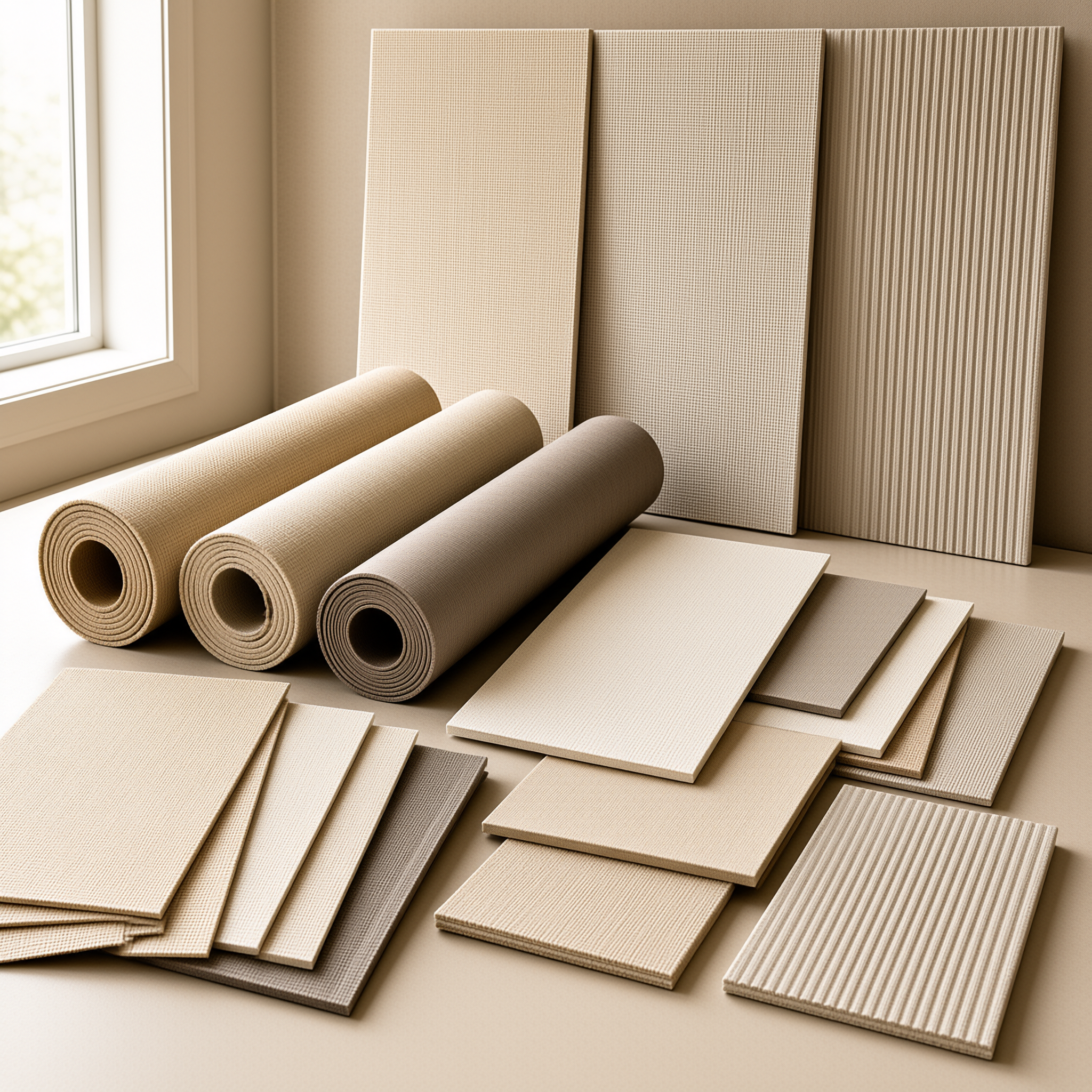
What to Evaluate Before Choosing a Wallpaper OEM Manufacturer
Evaluate a wallpaper OEM manufacturer on six factors: customization range, substrate availability, sampling discipline, MOQ flexibility, quality control and export support. Price is downstream of all six.
Production Capability and Customization Range
Ask which print methods the manufacturer runs and which substrates it stocks. A supplier offering only one method will steer every design toward it, whether or not the repeat suits it. Verify range by requesting two samples in different substrates rather than by reading a capability list.
MOQ and unit pricing can vary depending on the material, design, customization scope, quantity and production requirements. B2B buyers should therefore compare quotations based on equivalent specifications rather than comparing unit price alone.
Sampling Discipline, MOQ Flexibility and QC Consistency
Sampling discipline separates reliable suppliers from merely responsive ones. Look for a documented strike-off process, colour matching under a defined light source, and written acceptance criteria before bulk production begins.
Quality consistency is the harder question. Ask how many rolls are pulled per batch, how defects are classified, and whether third-party inspection is available.Buyers can ask how samples are approved, how production consistency is checked, how defects are handled and what quality-control documentation is available for the project.
However, MOQ flexibility usually carries a premium.Lower-volume trial orders and larger production runs may have different cost structures. Buyers should confirm MOQ, sampling costs and bulk pricing directly according to the specifications of each project.
Where Custom Wallpaper Performs Best: Hospitality, Commercial and Brand Applications
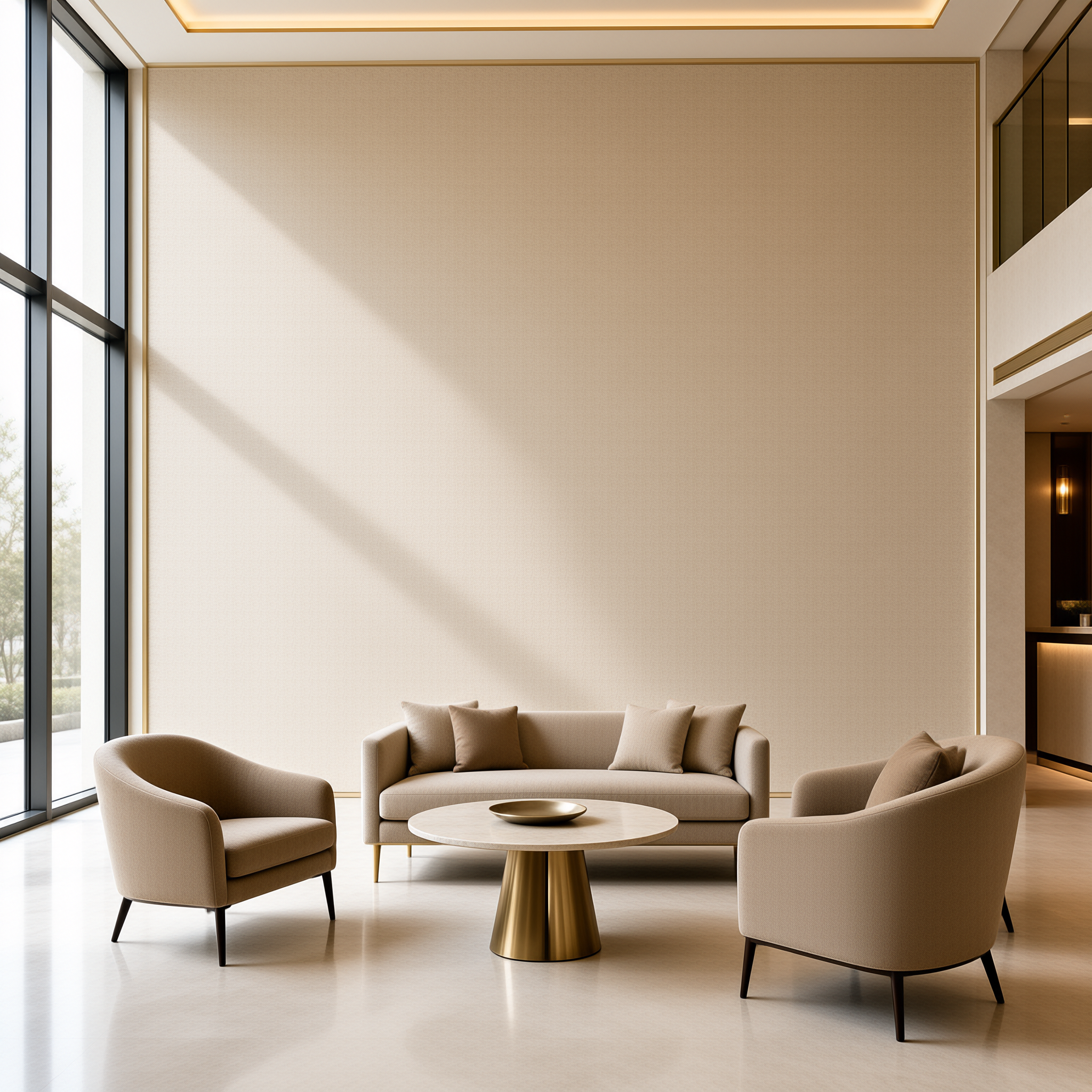
Custom wallcovering earns its cost where the surface must carry brand identity or survive repeated cleaning: hotels, restaurants, retail flagships, offices and branded showrooms.
Because the material stays in place for years under constant abrasion and cleaning, substrate durability and print rub resistance matter more than the novelty of the design.
Hospitality specifications commonly require documented fire performance and cleanability for corridors and guest rooms, which narrows the viable substrate list early in the project. Distributors selling into that channelHospitality and commercial projects may involve requirements related to material selection, maintenance, installation, dimensions and applicable project standards. These requirements should be identified early so that the appropriate wallcovering solution can be evaluated before sampling and production.
Why Sampling Is the Most Important Step Before Bulk Production
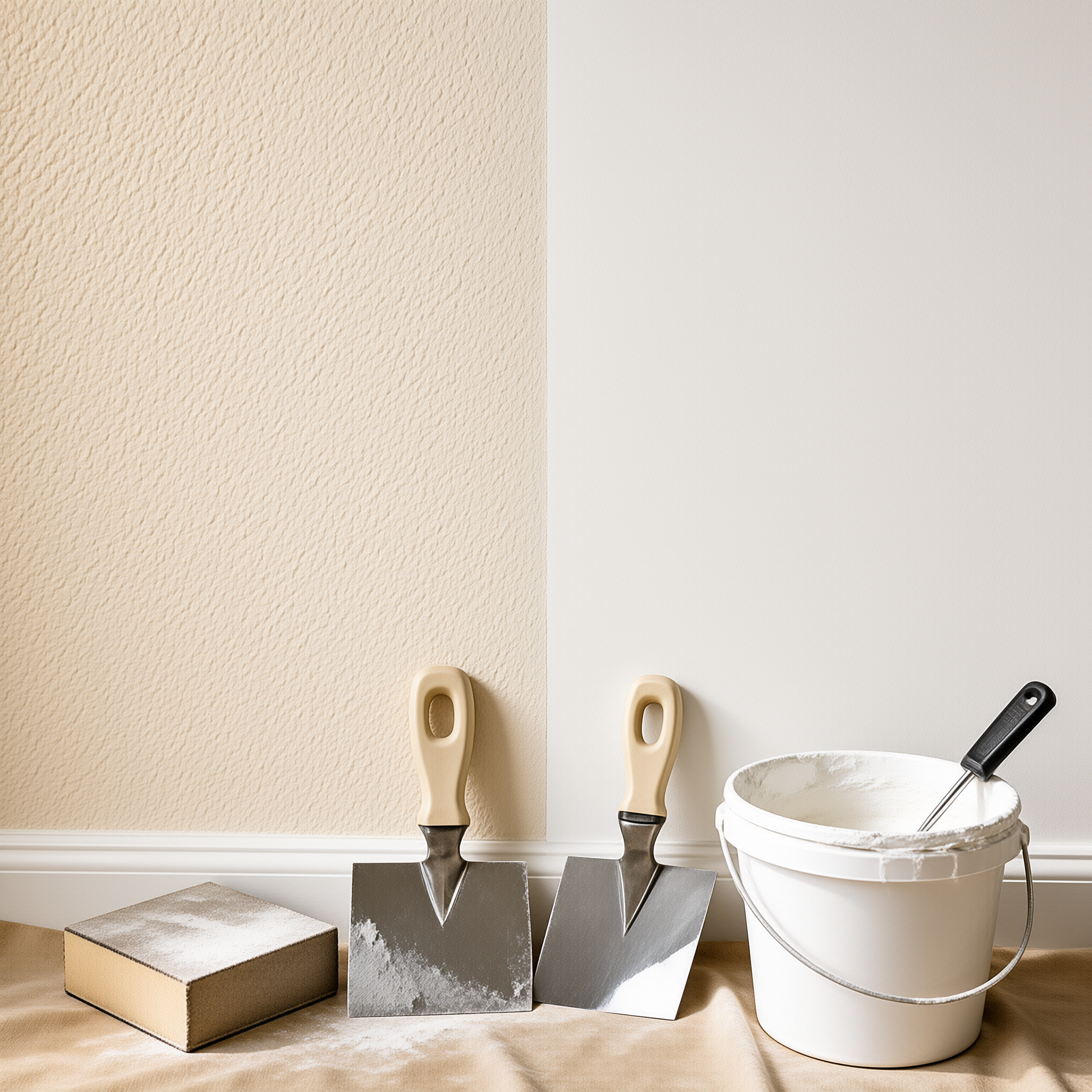
The most common bulk-production failure is colour drift: the delivered roll does not match the approved proof. Physical strike-off sampling is the only reliable way to catch it before the full run.
Screens render colour in RGB with backlighting, while ink on substrate reflects light instead. Ink absorption differs between coated and uncoated bases, so identical artwork produces different density on different substrates — which is why approving colour from a monitor tells you little about the printed result.
Physical sampling gives buyers an opportunity to evaluate color, pattern scale, surface appearance, material feel and the overall printed result before bulk production. Because screens cannot fully represent the appearance of a physical wallcovering, sample confirmation is particularly useful for customized projects.
For private label wallpaper, the approved strike-off also becomes the physical reference standard for seasonal reorders, settling disputes about batch variation before they start.
Preparing Your Quotation Request: Information That Speeds Up Sampling
A quotation request that includes artwork files, substrate preference, target quantity, roll dimensions, application scenario and packaging requirementsA detailed quotation request helps the manufacturer evaluate the project more efficiently and reduces unnecessary back-and-forth during the early stages.. A vague brief produces an estimate nobody can commit to.
Quantity and repeat size drive cost more than most buyers expect, because together they determine whether cylinder tooling is economical or digital printing is the better route. Below a certain run length, digital avoids tooling entirely and wins on total cost; above it, cylinder-based methods pull ahead per roll.
Artwork files —Artwork, design files or visual references, if available.
Substrate preference or performance requirement, including cleanability and fire rating.
Target quantity and expected reorder frequency.
Roll or panel dimensions and pattern repeat.
Application scenario — guest room, corridor, retail or office.
Packaging and private label specification, including carton and label details.
For distributors launching a new collection, the fastest way to obtain comparable quotes is to send an identical brief to every supplier. Comparing unit price without comparing substrate, repeat size and packaging scope produces a misleading ranking.
Frequently Asked Questions
- What is the difference between wallpaper OEM and ODM services?
- In OEM, the buyer supplies finished artwork and retains design ownership. In ODM, the manufacturer develops or supplies the pattern and the buyer applies its own brand.
- What is the typical MOQ for custom wallpaper OEM orders?
- MOQs vary by substrate and print method and are usually confirmed per project. Pilot runs below 1,000 rolls are possible but typically cost 20-35% more per roll than standard batches.
- How long does a full OEM wallpaper project take?
- Sampling usually takes 7-15 days and bulk production 20-35 days, with ocean transit added on top. Seasonal projects should be planned backwards from the installation date.
- Can I get private label wallpaper packaging with my own brand?
- Yes. Typical deliverables include branded hangtags, barcode labels, installation insert sheets and outer cartons printed with the buyer's identity.
- Are OEM wallpapers suitable for hotel and commercial interiors?
- Yes, provided the substrate is specified for the application. Hospitality projects normally require documented fire performance and cleanability, which points to non-woven or vinyl-backed constructions.
- What artwork files do I need to supply for OEM wallpaper production?
- Vector AI or EPS, layered PSD, or high-resolution TIFF with an embedded colour profile. Including a repeat mockup speeds up quoting and reduces revision rounds.
Colour drift caught at strike-off costs a sample revision; the same drift caught after bulk production costs the entire run.
Buyers comparing wallpaper OEM services across several suppliers get more usable answers when the brief is identical for each. The practical next step is to request a strike-off sample against a written specification, then score the returned samples on colour accuracy, hand feel and edge quality before discussing price. Request an OEM / ODM Wallpaper Solution.