Learn whether you can paint over your wallpaper, how to strip it safely, and how to calculate rolls with pattern repeat, waste and spare allowance.
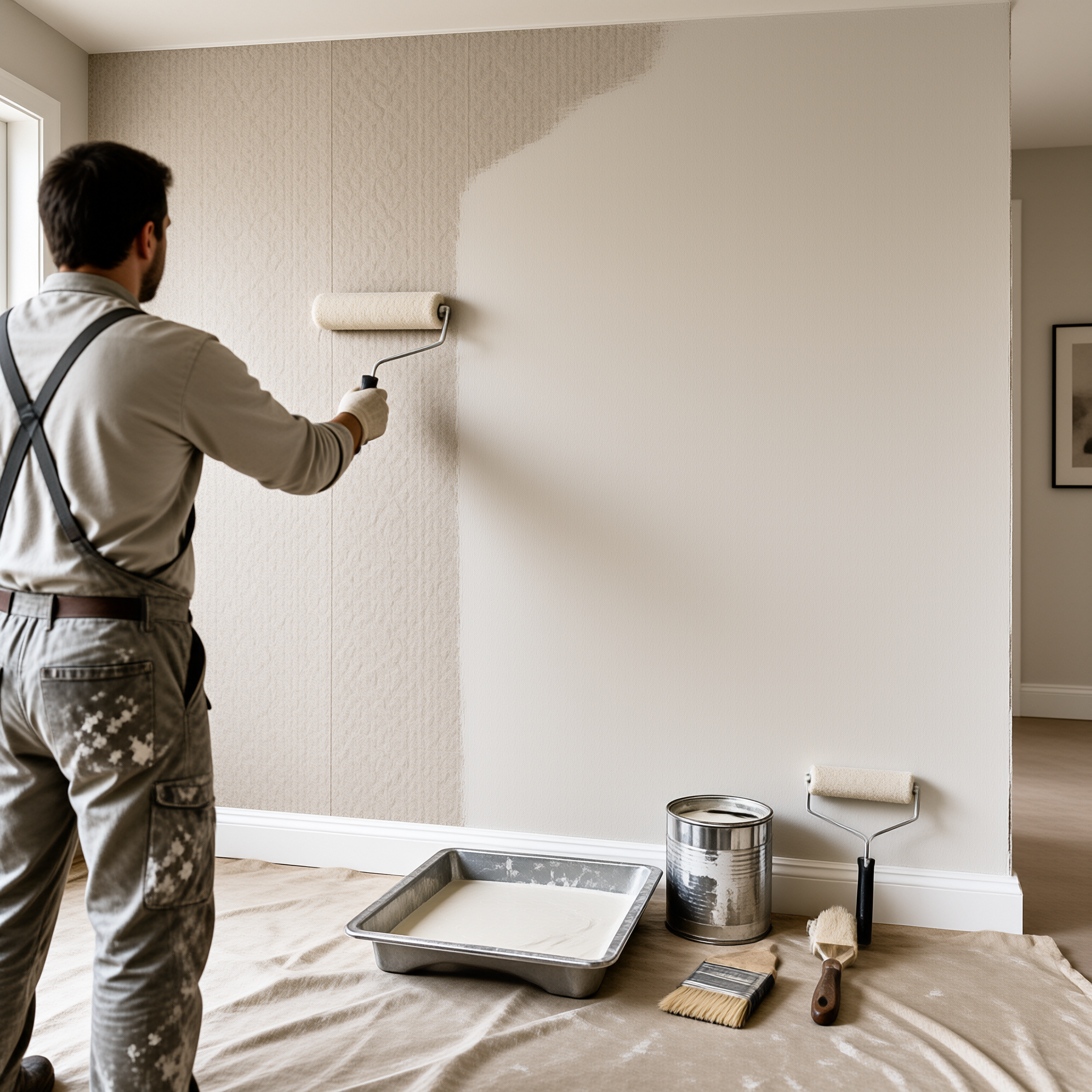
Can wallpaper be painted over? Sometimes, but only when the existing wallcovering is firmly bonded, sealed and low in relief. Coated vinyl and most non-woven wallcoverings are the realistic candidates. Uncoated paper, foil, flock and deep embossed patterns usually fail once paint moisture reaches the old adhesive. Treat paint-over as a cosmetic option for a sound wall, never as a repair for a failing one.
Key Takeaways
Paint over only sealed, flat and soundly bonded wallcovering. Lifting seams, bubbles and damp staining always require removal.
Run a patch test that includes a seam and a corner, then judge adhesion and appearance after the paint has cured.
Measure wall height and total run length separately, then work out drops per roll from roll length divided by wall height plus the pattern repeat.
Order the full quantity as one batch, with waste allowance and at least one spare roll, especially on custom and commercial runs.
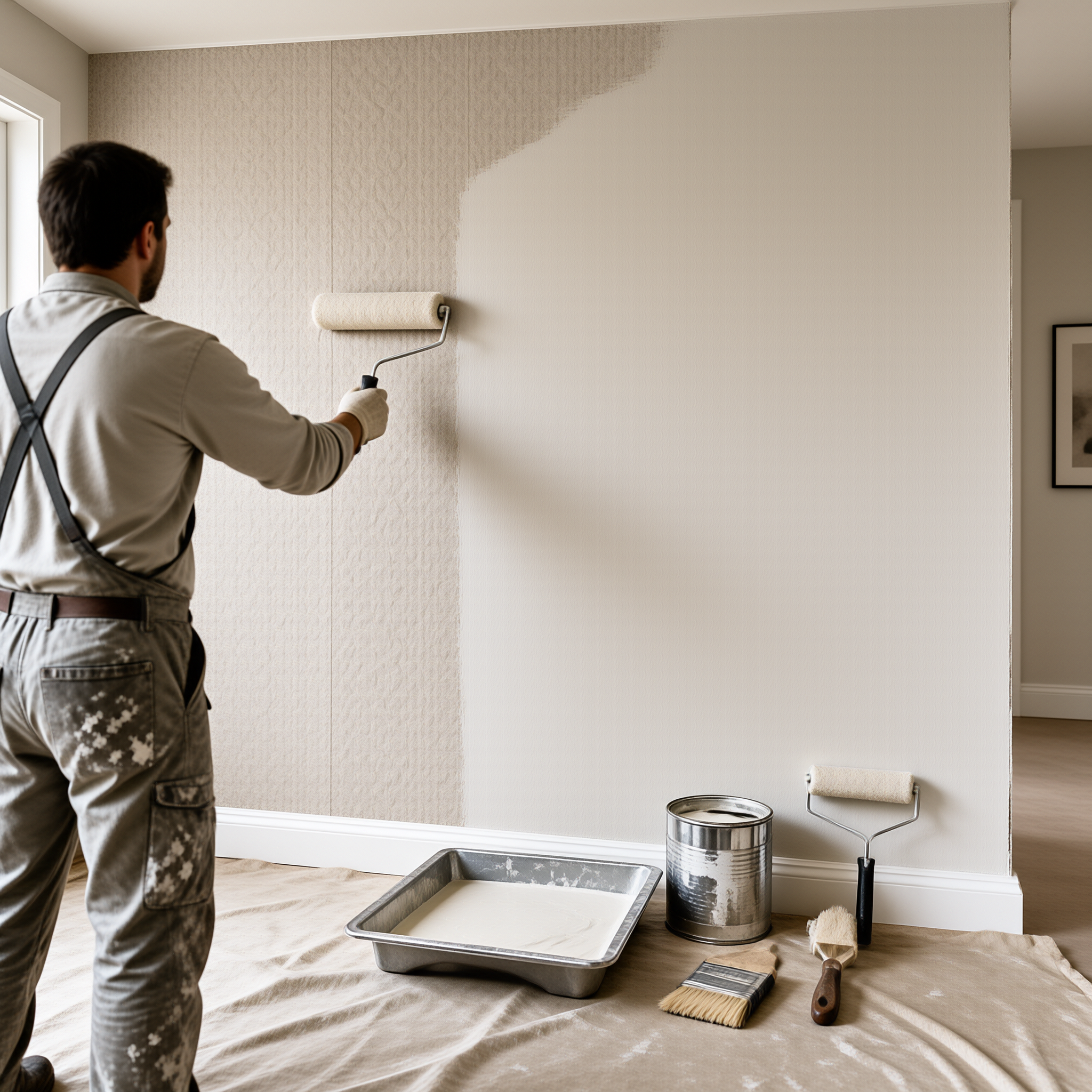
Can Wallpaper Be Painted Over, or Should You Strip It First?
Painting over is a cosmetic decision, not a repair. It can work where the wallcovering is tightly bonded, sealed and flat. It cannot fix bubbling, lifting seams, damp staining or a soft substrate.
A coat of paint simply locks those faults in place until the next renovation.
Surface chemistry decides the outcome more than the colour you choose. Sealed, coated and non-woven products do not readily absorb paint moisture, so the adhesive layer underneath stays dry and the seams stay flat. Uncoated paper, foil, flock and deep embossed designs behave the opposite way: the paint softens the facing, fills the relief and pushes moisture into the old paste.
| Wallcovering type | Paint-over potential | Why it behaves that way |
|---|---|---|
| Coated vinyl or vinyl-faced | Usually the best candidate | The sealed face resists paint moisture, so the adhesive underneath stays dry and seams stay flat |
| Non-woven (paste-the-wall) | Often workable if firmly bonded | Dimensionally stable and low in relief, so seams and surface behave predictably |
| Uncoated paper | Poor | Absorbs paint moisture, softens, and re-activates the original paste |
| Deep embossed or textured | Poor | Paint fills and blunts the relief while the pattern still telegraphs through |
| Foil or metallic | Poor | The film flattens and edges lift once paint sits on the surface |
| Flocked | Poor | Fibres trap paint unevenly and mat down permanently |
| Any type with lifting seams or damp | No | Paint traps the failure in place and hides it until it returns |
One condition is easy to miss. Wallpaper hung over an unstable substrate, such as loose plaster or old distemper, will fail under paint no matter how good its facing material is. A firm palm press across the wall in several places tells you more than the product label does.
When Painting Over Wallpaper Works, and When It Fails
Water-based paint delivers moisture into the adhesive layer.
Where adhesion is marginal, the failure is delayed rather than instant. Seams curl and edges lift within weeks, once the paint has cured and the room has been through a few humidity cycles. That delay is why patch tests matter more than a first-day inspection.
Surface relief is the second problem. Embossed patterns and heavy texture remain visible through paint, and the finish reads as a painted textured wall rather than a smooth one. Skimming or lining first usually costs more than stripping, which typically makes removal the cheaper route to a flat wall.
A paint-over is only as stable as the adhesive underneath it, so the risk sits at the seams and edges rather than in the middle of the wall.
Every added layer also reduces future strippability. A painted wallcovering is harder to remove than an unpainted one, because the paint film seals the surface and slows the water or steam that would otherwise reach the paste. The cost of today's shortcut is paid at the next refurbishment.
Before committing to a whole room, apply paint to a small patch that includes a seam and a corner. Leave it to cure for at least a week, then check adhesion and appearance. This single test is the cheapest risk control in the project.
Paint Over or Remove? A Decision Framework Before You Renovate
| Path | Best when | Finish you get | Main trade-off |
|---|---|---|---|
| Paint over existing | Wallcovering is sealed, flat and firmly bonded | Textured painted wall | Lowest cost now, harder stripping later |
| Strip and paint | You want a smooth painted wall and the substrate is sound | Smooth paint after making good | Removal and repair labour |
| Strip and re-paper | New wallcovering is specified and the wall is sound | Clean new decorative surface | Longest programme, fewest unknowns |
| Skim coat and paint | Heavy texture, damage or an uneven substrate | Fully smooth plaster finish | Drying time and disruption in occupied spaces |
If the desired result is a smooth painted wall, removal plus making good is effectively unavoidable. Paint-over only ever delivers a textured painted finish, which is fine in a rental turnover or a secondary room and rarely acceptable in a specified hotel scheme.
Hanging new wallcovering over old wallpaper is sometimes done in low-traffic residential work. It should be confirmed against both the wallcovering and adhesive manufacturer's guidance, and it is not appropriate where the existing layer is failing or already painted.
In occupied commercial and hospitality spaces, downtime and phasing often outweigh the labour saving of painting over. A floor that must stay open may favour a fast paint-over, while a full refurbishment almost always favours stripping while the room is already out of service.
How to Remove Wallpaper: Methods by Wallcovering and Adhesive Type
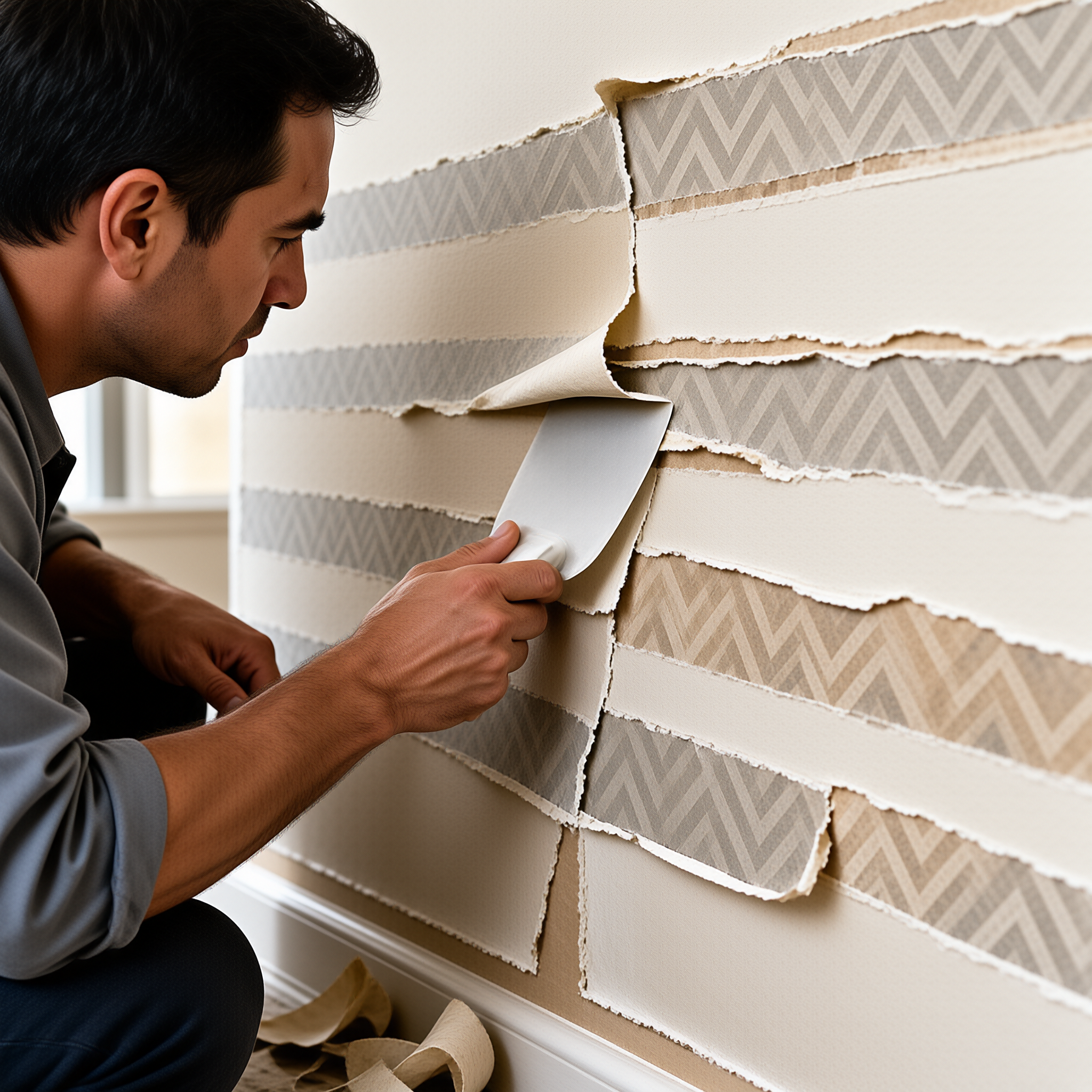
Work in a fixed sequence. Protect the floor, isolate power to sockets, then separate the layers rather than attacking the wall as one surface.
Remove the vinyl or coated face layer dry where it peels away cleanly, leaving the paper backing on the wall.
Perforate or score the backing so liquid can reach the adhesive. Scoring a vinyl face without removing it first is largely ineffective.
Apply warm water or steam in short passes and let the wall recover between them. Over-wetting damages drywall facing and plaster keys.
Lift the backing with a broad stripping knife held at a shallow angle, working with the wall rather than into it.
Wash off residual paste with clean water until the surface is no longer slick, then let the wall dry fully.
Leftover adhesive is a leading cause of failure in both new paint and new wallcovering, because it seals suction unevenly and prevents primer from bonding. If the wall still feels soapy after two washes, wash it again. Chemical strippers suit stubborn paste and specialist adhesives, but they need ventilation and a test patch first.
How Much Wallpaper Do I Need to Buy?
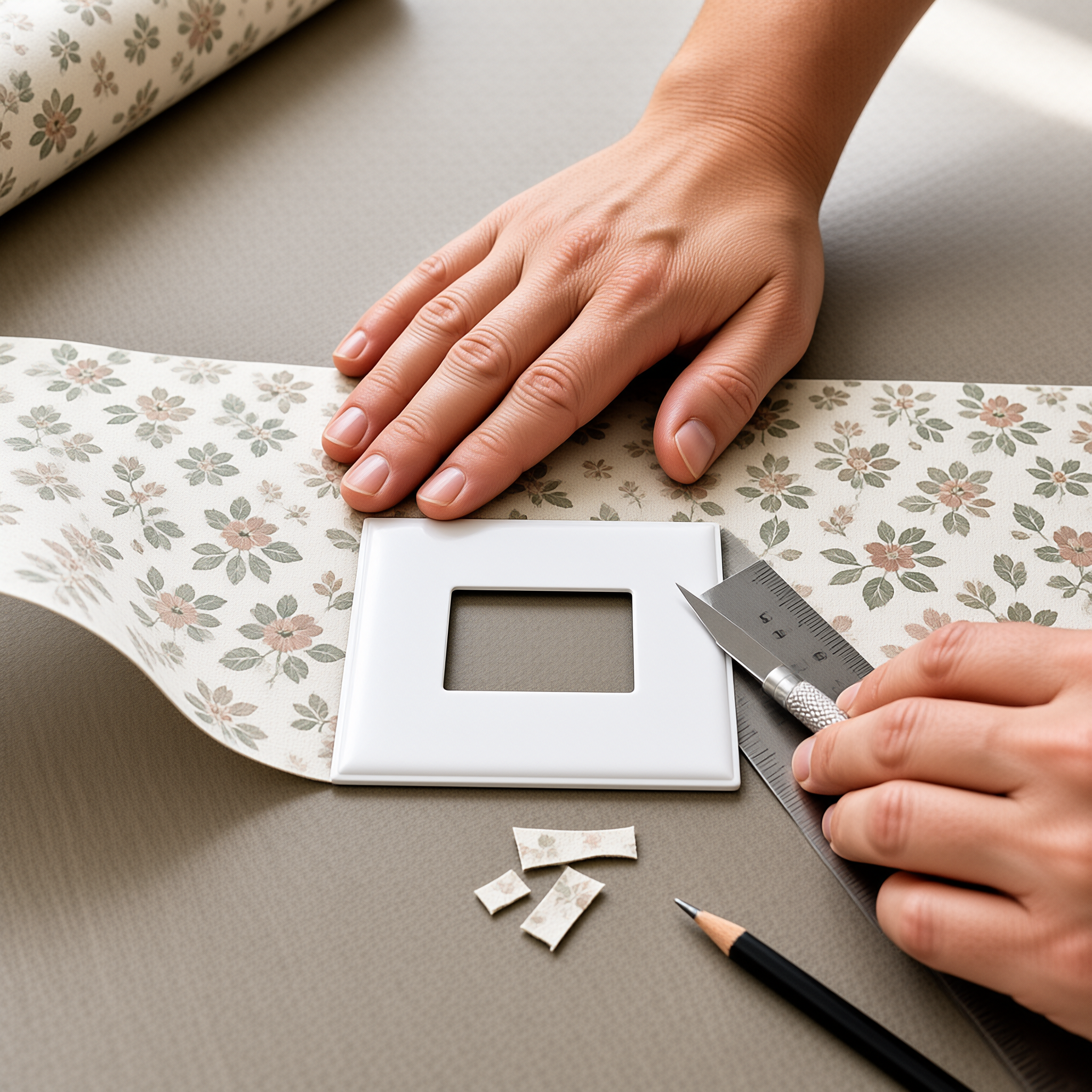
Wallcovering is a vertical material, so quantity is driven by height and run length rather than floor area. Measure each wall separately at its widest point, and measure height from the highest ceiling point to the lowest skirting point. A single averaged height under-orders on sloped or uneven ceilings.
Total run length is the sum of wall widths, not the room's floor perimeter. Alcoves, chimney breasts and returns all add drops even where they add no floor area. Deduct openings only when they are genuinely large relative to the wall, because small windows and sockets are usually covered by offcuts and deducting them causes under-ordering.
Record the coverage figure printed on the specific product you are ordering. Roll dimensions vary by manufacturer and product line, so a generic wallpaper quantity calculator can mislead. Use calculators for a first estimate, then confirm against the actual roll length, width and repeat.
From Roll Count to Order Quantity: Repeat, Waste and Spares
Usable drops per roll fall as the pattern repeat grows. Each drop must be cut to wall height plus a matching allowance, so the arithmetic is roll length divided by (wall height plus repeat allowance), rounded down. Drops needed is total run length divided by roll width, rounded up.
As an illustration, a 2.7 m wall height with a 0.64 m straight repeat needs about 3.34 m of material per drop before trimming.
A 10.05 m roll at that drop length gives three usable drops, and the remainder is offcut that cannot be matched elsewhere. If the room runs 12 m and the roll is 0.53 m wide, you need 23 drops. At three drops per roll that is 8 rolls. Add one spare and the order becomes 9. Half-drop matches usually waste slightly more, because alternate drops must be staggered.
Add an explicit waste allowance for trimming at ceiling and skirting lines, corners and mis-cuts, plus at least one spare roll for future repair. Order the entire quantity as one batch, because rolls from a different production run can differ subtly in colour and a custom print cannot be topped up casually later.
Preparing the Wall Afterwards
Three conditions cause most failures on newly stripped walls: residual paste, dust and inconsistent absorbency. Primer or sizing equalises suction so adhesive and paint cure evenly. Painted walls being re-papered need a sound, clean, low-gloss surface, and flaking paint must be removed rather than covered.
Fill and sand gouges, damaged plaster and exposed drywall facing before any decorative layer goes on, because wallcovering shows every defect underneath. If the wall is deliberately textured, settle the approach first by comparing lining paper versus a full skim coat in the knockdown and skim coat guide. For bare brick, concrete or wood, the surface preparation guide for those substrates covers the sequence.
Locking Quantities on Custom and Commercial Runs
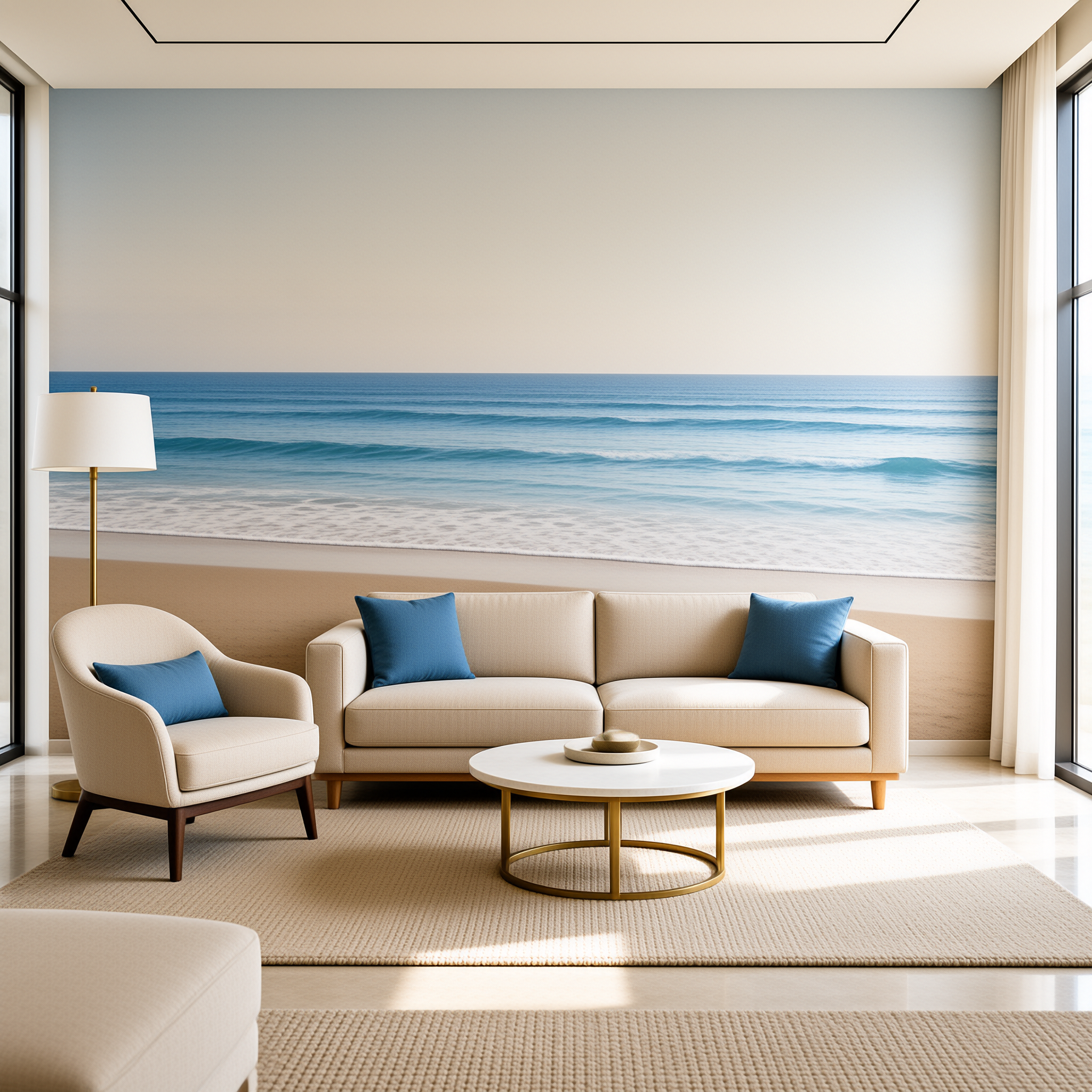
On hotel and commercial projects the quantity decision and the production decision are the same decision. A custom print is made to order, so a shortfall discovered mid-installation cannot be solved by buying another roll locally. Specifiers should finalise drop counts and pattern repeat before the production run is confirmed, and hold the spare roll with the project handover file.
Can wallpaper be painted over to save a fast turnaround? Often yes, but that shortcut never removes the need to lock quantities before the press run starts.
VELORA manufactures custom wallcovering for interior designers, architects, hotel developers, wholesalers and commercial buyers. Review the VELORA wallcovering product range for material and finish options, and the custom wallcovering OEM/ODM service for private-label and project-specific development. Share your measured schedule, pattern repeat and target programme when you enquire, so quantity and sampling can be agreed before budget is committed.
Frequently Asked Questions
- Can wallpaper be painted over?
- Sometimes. Coated vinyl and firmly bonded non-woven wallcoverings usually accept paint, while uncoated paper, foil and flocked products tend to bubble or lift. Test a patch that includes a seam before doing a whole room.
- How much wallpaper do I need?
- Divide total run length by roll width to get the number of drops, then divide roll length by wall height plus the pattern repeat to get drops per roll. Round up, add waste allowance and at least one spare roll.
- How do I remove wallpaper?
- Peel any vinyl face dry, score the paper backing, then apply warm water or steam in short passes. Wash off residual paste until the wall is no longer slick and let it dry fully before priming.
- Can I use a wallpaper quantity calculator?
- Use one for a first estimate only. Confirm the roll length, roll width and pattern repeat printed on the exact product, because generic calculators assume standard coverage that your product may not have.
- Does painting over wallpaper make later removal harder?
- Yes. The paint film seals the surface and slows the water or steam needed to soften the old paste, so the next strip usually costs more in labour.
- Can I hang new wallpaper over old wallpaper?
- Only where the existing layer is sound and both the wallcovering and adhesive manufacturer confirm it. It is not appropriate where the old layer is lifting, bubbled or damp. If the old layer would pass the patch test above — the test that answers can wallpaper be painted over — a new layer can usually go on top too.
- How much extra should I order for pattern matching?
- Allow one full repeat per drop for matching, roughly ten percent for trimming and mis-cuts, plus at least one spare roll for future repair.