Learn how to plan multi-panel wallpaper design: artwork prep, wall measurements, panel numbering and installer communication before files go to production.
Multi-panel wallpaper design treats one large artwork as a single composition, then splits it into an ordered, numbered set of panels for production and installation. Getting that split right depends on accurate artwork, confirmed wall dimensions and the correct hanging sequence. This brief walks through the decisions designers and buyers should settle before the file goes to production.
Key Takeaways
Evaluate the full elevation, not individual panels, when you approve a mural for production.
Confirm one final set of wall dimensions and state which version the layout was drawn against.
Number panels on the layout, on the panel itself and in the packing order.
Fix an alignment datum before the artwork is cut so motifs continue across joints.
Approve artwork and material surface together, because texture changes how the same file reads.
In most projects, problems on site trace back to paperwork, not printing. A panel hung in the wrong order, a layout drawn against a superseded survey, or artwork sent without its elevation drawing will all cost more to fix than to prevent. The controls below are simple, but they only work when they are agreed before production starts.
What Is Multi-Panel Wallpaper Design?
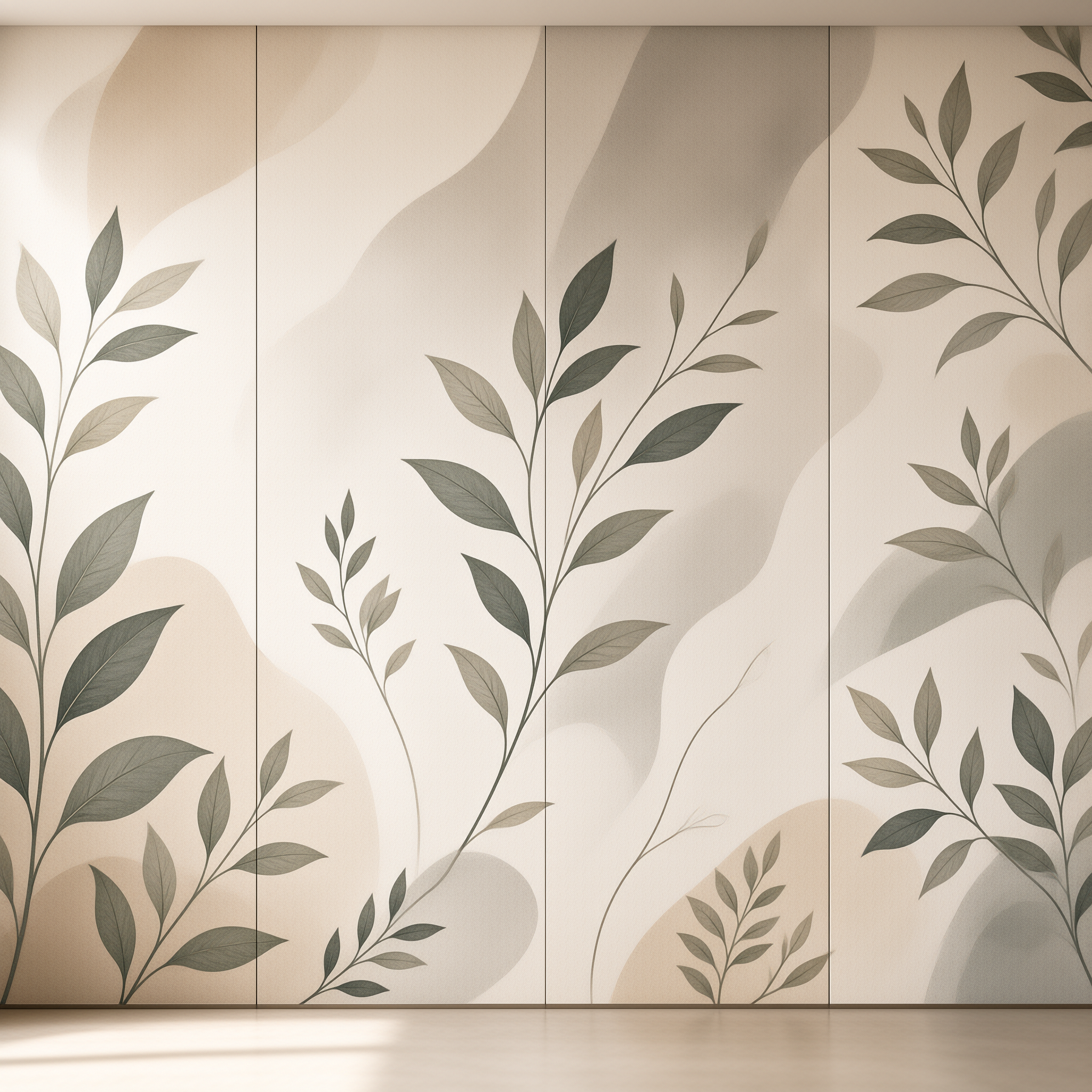
A large mural is rarely produced as one piece. It is divided into panels so it can be printed, packed, transported and handled on site. Each panel is a slice of the same artwork, with its own position in the sequence. The designer's job is to judge the whole wall composition, because no single panel carries the design on its own.
This is where buyers often misunderstand the file. The artwork defines composition and scale; the panel layout defines where that composition is cut.
Both travel together to production, and both should be reviewed as a pair. Sending artwork alone leaves the split to someone else's judgement. Panels are usually produced and packed in hang order, so the installer opens the set in the sequence the designer planned — the practical link between design intent and the finished wall. Our overview of the custom wallcovering OEM and ODM service shows how artwork, layout and material decisions sit inside one production brief.
Why Panel Layout Planning Matters for Large Walls
Wall dimensions decide how the artwork is cut. If a layout is drawn against unconfirmed numbers, every downstream decision inherits that risk. A survey taken before building works finish may not match the wall that is actually there on install day.
Visual balance, meanwhile, has to be judged across the full elevation.
A focal motif placed on a panel joint behaves very differently from one placed in the middle of a panel. In practice, designers who sketch the joint lines over their composition early avoid awkward crops later. Pattern continuity is planned at the joints, because joints are where discontinuity first becomes noticeable — and numbering, packing order and hang direction all follow the same approved plan. When those three agree, the installation becomes a sequence to follow rather than a decision to make on site. Full-elevation installs covered by Dezeen's project coverage are a useful reminder of how visible that discipline is in the finished result.
A panel layout is only as reliable as the measurement set it was drawn against, so the version date matters as much as the numbers.
How to Create a Continuous Pattern Across Multiple Panels
Fix an alignment reference before anything is cut. That might be a ceiling line, a datum at a fixed height, or a dominant motif that crosses a joint. Once the reference is set, every panel inherits it, and the installer has a check point for the first drop.
Keep the artwork at its intended final proportions. Stretching or re-cropping a file to fit a wall changes where elements fall relative to panel edges. A slightly wider wall is better handled by adjusting the design with the manufacturer than by squeezing the file.
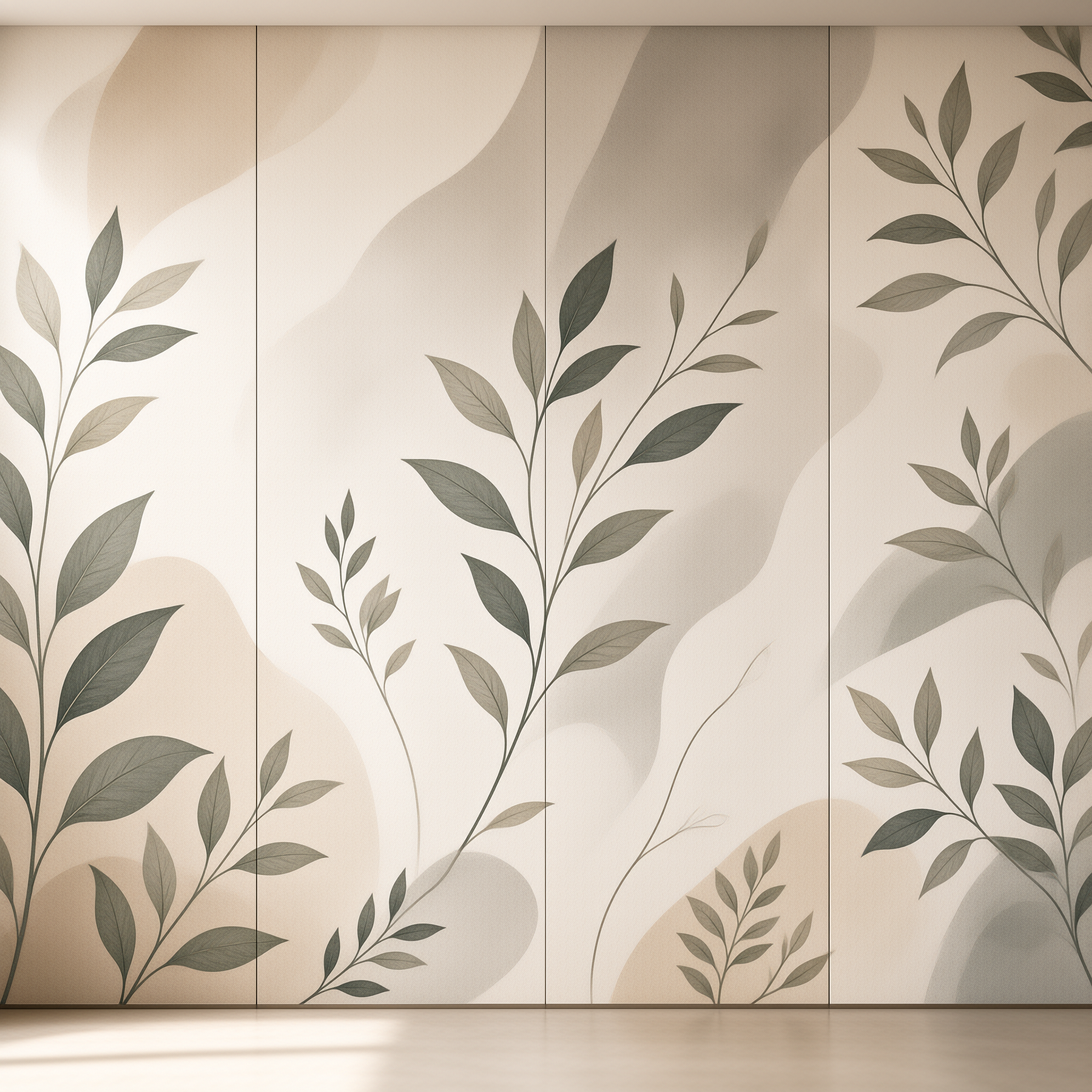
Number panels in reading or hang order and mark the top of each panel on the layout. Direction errors are one of the most common causes of mismatched joins. For repeating or semi-repeating compositions, define the repeat relationship deliberately so adjacent panels are not mirrored or duplicated by accident.
Check continuity at every joint twice. First view the full panel set side by side at reduced scale to read the overall flow. Then zoom into each joint to confirm motifs, lines and tonal gradients actually meet. Design publications such as Dezeen are useful for studying how full-elevation compositions are handled in finished interiors.
Set one alignment datum (ceiling line, fixed height, or a joint-crossing motif).
Keep final artwork proportions; do not stretch the file to fit the wall.
Number panels and mark tops on the layout.
Define how repeats relate across joints before splitting.
Review reduced-scale continuity, then zoom each joint.
Wall Measurements and Panel Size Considerations
A manufacturer needs a complete measurement set before a layout can be drawn. Record overall wall width and height, and note where each dimension was taken, because floor-to-ceiling height is not always consistent across a large wall.
List every feature that interrupts the mural: wall divisions, corners, internal and external angles, columns, door and window openings, sockets, radiators and fixed joinery. Note ceiling height variation, skirting and cornice depth, and anything that changes usable installation height.
Confirm final dimensions before production starts. Site numbers can change after a first survey, and a layout approved against earlier figures will not match the finished wall. Where wall condition is the real constraint rather than the design, work through surface readiness separately; our guide to wallpaper substrate preparation covers that ground.
| Input | Why it matters to the layout |
|---|---|
| Overall width and height | Sets artwork scale and panel split |
| Where dimensions were taken | Reveals height variation along the wall |
| Corners and angles | Define where panels start, stop or turn |
| Openings and fixed joinery | Determine what the composition must avoid |
| Skirting and cornice depth | Reduce usable installation height |
| Measurement date and version | Confirms which survey the layout was drawn against |
Choosing the Right Design for Large-Scale Wallpaper Murals
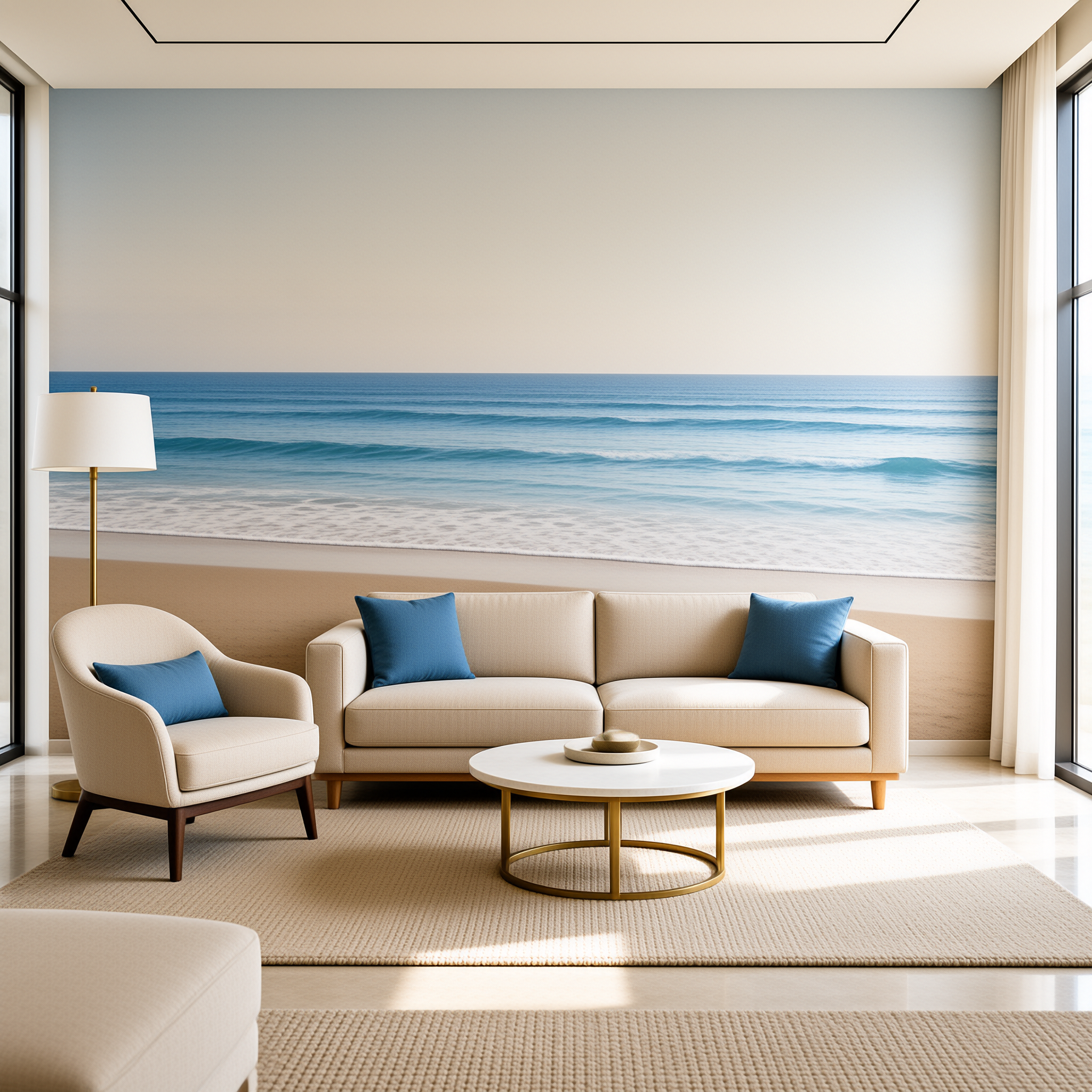
Botanical and landscape scenes work well when the artwork is composed for the full elevation. Foliage or a horizon line crossing panels intentionally reads as one scene. If the horizon falls randomly, the joints become visible interruptions in the picture.
Abstract and tonal compositions are more forgiving of architectural interruptions. Continuity is carried by colour and gradient rather than by a recognisable object, so a column or doorway disrupts less. Geometric patterns need the tightest planning, since a grid that drifts or changes scale across a joint is immediately obvious.
Design scale should be judged from where viewers will actually stand. A motif that looks right on screen may read as too small at full wall height. Hospitality work often needs the composition to work around reception desks or corridor junctions, so test the design against the elevation drawing. Architectural Digest is a useful reference for how murals sit within interior schemes.
Material Considerations for Multi-Panel Wallpaper Projects
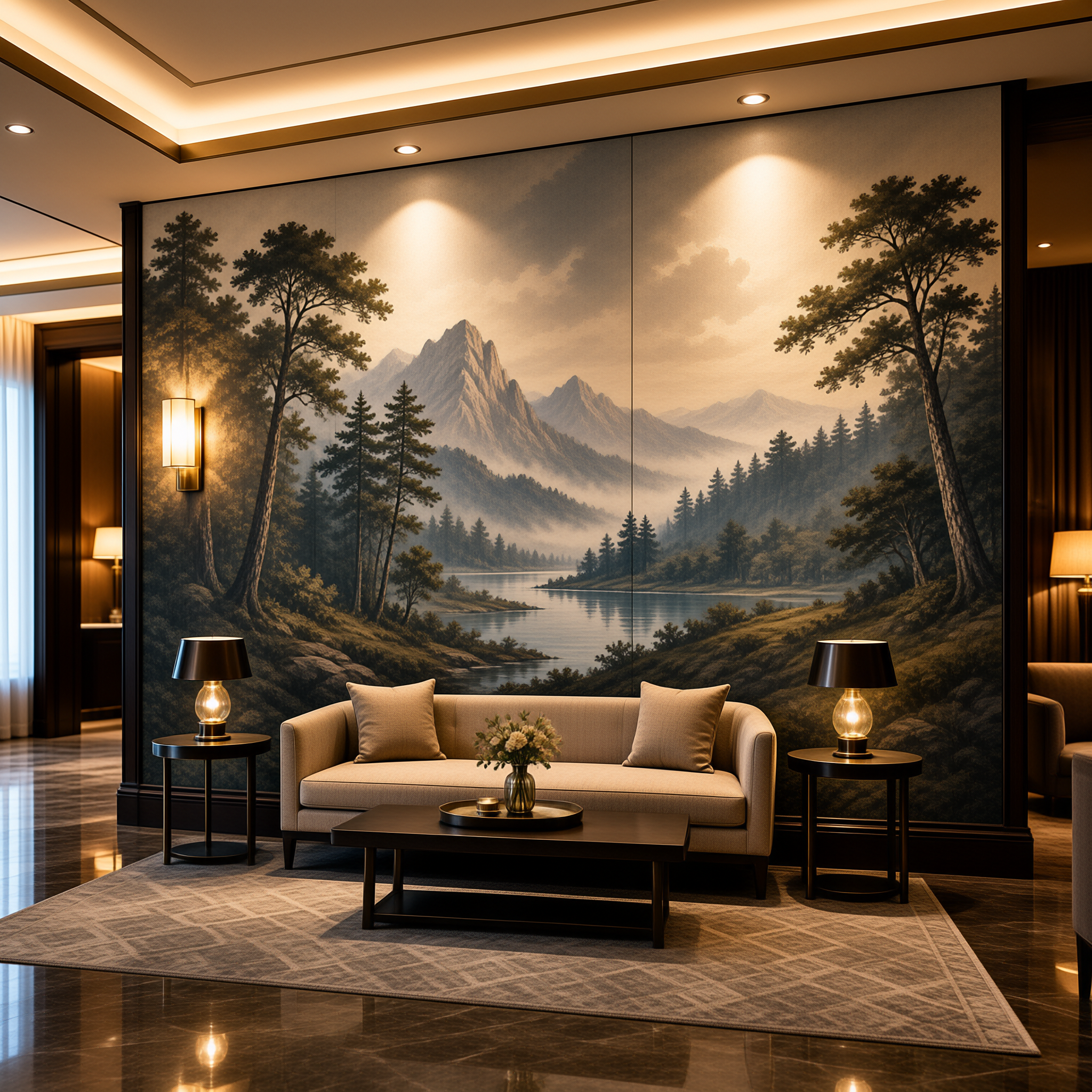
Velvet-texture wallpaper gives a soft, light-absorbing surface. It suits painterly, botanical and tonal murals where the pattern should feel atmospheric rather than graphic. Canvas-texture wallpaper offers a more defined woven surface, which reads well with architectural, geometric and documentary-style imagery.
Surface texture interacts with artwork detail. Fine linework and small-scale motifs can be softened by a pronounced texture, so the design and the material should be approved together. Our textured wallpaper guide covers how surface direction changes the feel of a finished wall.
Material choice is part of the approved specification. Changing surface direction after artwork approval may change how the same file appears on the wall, which affects the client's expectation of the finished result. The available surfaces are set out on our wallcovering products page, so the surface can be fixed in the same brief as the artwork.
Common Panel Alignment Problems and How to Prevent Them
Most alignment issues on site fall into a handful of predictable categories. Each one has a specific control, and each control is cheaper than a remake.
| Problem | Control |
|---|---|
| Incorrect panel sequence | Number on the layout, on the panel and in the packing order |
| Inconsistent dimensions | Confirm one final measurement set and state the version used |
| Unclear artwork references | Supply the approved elevation layout with the artwork file |
| Pattern discontinuity | Check every joint in the layout and agree where cuts are allowed |
| Insufficient install planning | Agree hang direction, start point and who checks panel one |
The first-panel check is often skipped. A brief pause after the first drop, before the set is committed, catches sequence and orientation errors while they are still easy to correct.
Communication Between Designers, Buyers, and Manufacturers
Send the artwork file with the elevation drawing, panel layout and any site photographs. The manufacturer then sees the design in its final context rather than as a flat image. State the material direction in the same brief, and confirm which layout version was approved.
Ask for a numbered panel layout to review before production. Check it against the wall and the elevation, not just against the artwork. If samples are part of the process, approve material and artwork together so the client signs off on the combination they will actually receive. Professional networks such as IIDA are a practical way to align designers, specifiers and contractors around one approved package before work starts on site.
How Do You Keep Wallpaper Panels Aligned Across a Large Wall?
Alignment comes from three things working together: accurate artwork, confirmed wall dimensions and the correct installation sequence. No single step carries it. A clean file on an unmeasured wall, or precise dimensions with a stretched artwork, still produces a compromised result.
Agree an alignment datum at the start, number the panels, pack them in hang order and check the first panel before the rest go up. That sequence gives the installer a reference and gives the designer a way to verify the plan is being followed.
Better Planning for Large-Scale Custom Wallpaper Designs
A coherent wall comes from planning, not from hoping the joints disappear. Treat the mural as one artwork with an ordered panel set. Confirm the dimensions once, fix the alignment reference, and approve the layout before files leave your desk. Good multi-panel wallpaper design is mostly a discipline of sequence and measurement.
Numbering panels on the layout, on the panel and in the packing order removes the single most common cause of installation error.
Frequently Asked Questions
- How many panels does a large mural usually need?
- It depends on wall width, ceiling height and the printable width the manufacturer works with. The panel count should come from the approved layout, not be fixed in advance.
- Can panel joints be completely invisible?
- No supplier can promise invisible joints on every wall. Alignment quality depends on accurate artwork, confirmed dimensions and correct installation over a sound surface.
- Should I send artwork or the layout first?
- Send both together, with the elevation drawing and the confirmed measurement set. Artwork alone leaves the split to someone else's judgement.
- What happens if wall dimensions change after approval?
- The layout no longer matches the wall. Reconfirm dimensions and revise the panel layout before production resumes.
- Does surface texture affect pattern matching?
- Texture changes how detail reads but does not change where a motif falls. Approve material and artwork together so the client sees the intended combination.
- Who checks the first panel on site?
- Agree this in writing before installation. Typically it is the installer with the designer or contractor confirming orientation and sequence against the approved layout.
If you are specifying a multi-panel wallpaper design for a hotel, retail or workplace project, bring the elevation, dimensions and material direction to the conversation early. VELORA works with designers, mural artists and project buyers on bespoke wall mural printing and panel layouts, and can review your artwork against the wall before production begins. Send your requirements and we will confirm the next step.