Plan hotel feature wall wallpaper zone by zone: pattern scale, texture, panel layout, lighting and the design-to-production checks hotel buyers need.
A hotel feature wall wallpaper scheme starts with one decision: which single surface should carry the accent of the room. That surface then drives pattern scale, texture, panel layout and lighting, because everything on it has to serve the guest's first sightline. Settle that decision early and the rest of the specification work becomes straightforward.
This guide is for hotel owners, hospitality designers, interior architects, renovation contractors and project buyers scoping a custom wall for a real building.
It moves zone by zone through a hotel — lobby, headboard, restaurant, lounge, corridor — and connects each design choice to the information a manufacturer needs before printing.
Key Takeaways
A feature wall is a hierarchy decision made with the concept, not a finish applied at the end of a project.
Each hotel zone asks something different of the wall: lobby walls read at distance, headboard walls read up close, corridor walls read in motion.
Pattern scale must be tested on the full elevation, not on an A4 sample.
Panel divides, seam positions and key motif placement belong on the elevation drawing before printing starts.
Material suitability for humid, high-traffic or food-service areas must be confirmed against the project's own standards.
What Is a Feature Wall in Hotel Interior Design?
A feature wall is the one surface in a room that a guest's eye is meant to land on first. It carries the accent while surrounding walls, joinery and ceilings stay quieter, so the accent reads as intentional rather than accidental. In hotel work the wall is tied to the arrival sequence: what a guest sees on stepping into a lobby, restaurant or guest room decides where the feature belongs.
The decision often goes wrong because it is made late, after finishes are locked. The feature wall then has to fight the joinery, the artwork and the lighting instead of supporting them. Completed hotel interiors covered by Hospitality Design usually show a focal surface echoing a palette that already exists in the furniture and materials.
One test is worth running before committing: remove the wall from the concept. If the room still has a clear hierarchy and a point of interest, it may not need a feature wall at all. Compact rooms, heavy furniture layouts and rooms with strong architectural detail often read better with calm, consistent walls.
Why Custom Hotel Feature Wall Wallpaper Works
Custom printing solves a coordination problem. A stock pattern arrives in a fixed colourway and a fixed repeat, and the designer then adjusts the scheme around it. With custom wallpaper for hotels, colour is matched to the project palette and to adjacent stone, timber, metal and textile, so the wall belongs to the room instead of sitting next to it.
Brand adaptability is the second gain. A motif can be built once, then recoloured, rescaled or cropped for different zones, or for different properties in the same brand family. That supports consistency without literal repetition, which matters to operators running several hotels under one identity.
Scale control is the third. Because the artwork is produced for a measured wall, the composition can be set to the real height and width rather than dictated by a stock repeat. Material selection still has to follow the project's own requirements, and the material families used across hospitality projects are set out in our commercial wallcovering for hotels guide.
Which Hotel Areas Benefit from Custom Wallpaper Feature Walls?
The zone decides the brief. A wall behind a reception desk is judged from several metres away while guests queue, and a wall behind a headboard is judged from the bed at close range. Treating both the same way is one of the most common specification mismatches.
| Hotel zone | What the wall must do | Design priority |
|---|---|---|
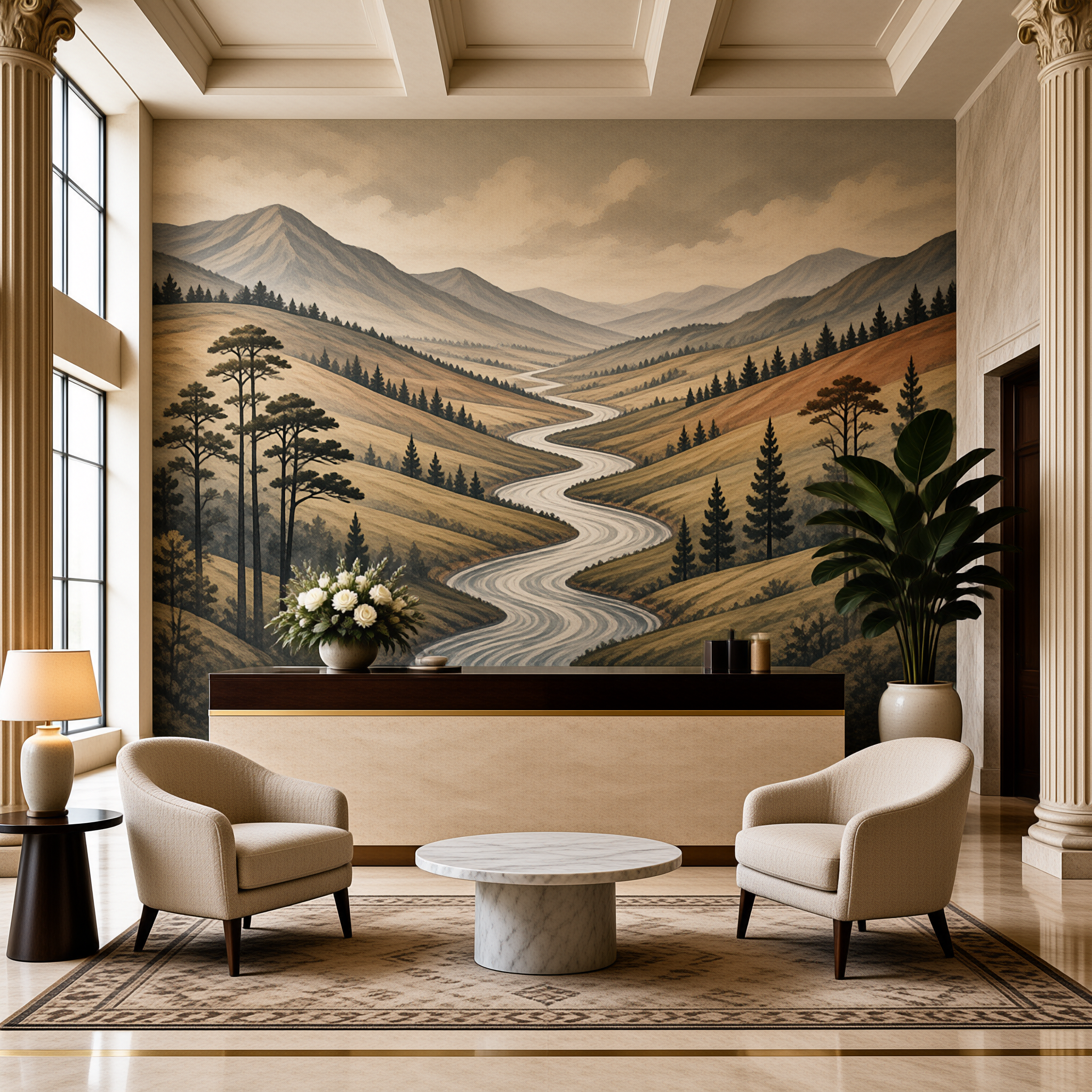
| Lobby and reception | Anchor the arrival view and hold attention while guests wait | Large composition, strong silhouette, minimal fine detail |
| Guest room headboard | Anchor the bed wall as seen from the bed and the doorway | Calm scale, centred on headboard width, works beside bedside light |
| Restaurant and bar | Set the mood behind banquettes, bar shelving or a serving pass | Depth and warmth, surface suited to the venue's cleaning routine |
| Lounge and seating | Frame a seating group and hold up in evening light | Mid-scale pattern, texture that reacts to warm lighting |
| Corridor and shared space | Maintain rhythm across many panels seen at an angle | Repeat continuity, disciplined seams, consistent tone panel to panel |
| Boutique common areas | Carry the strongest brand expression in the building | Distinctive motif, confident colour, artwork tied to the story |
Exposure differs sharply between these zones. A restaurant wall sees cleaning, close seating and food-service conditions that a rarely touched corridor wall never faces. Projects published by Hospitality Design show how differently each zone is resolved in practice, from a single quiet mural to a fully worked sequence of panels around a room.
Confirm suitability against the project's own requirements rather than assuming one material works everywhere, especially where humidity or heavy handling is involved.
Popular Design Directions for Hotel Feature Walls
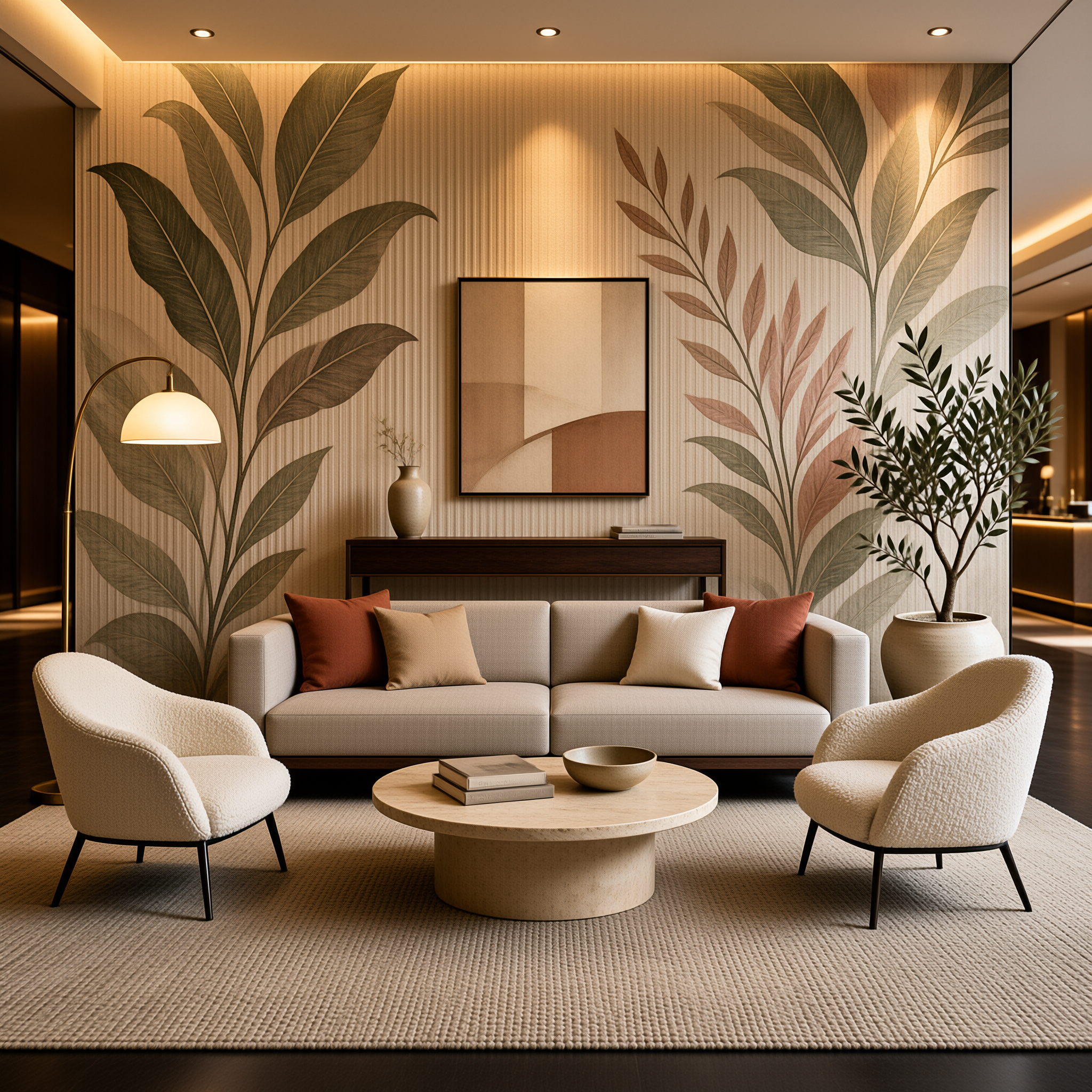
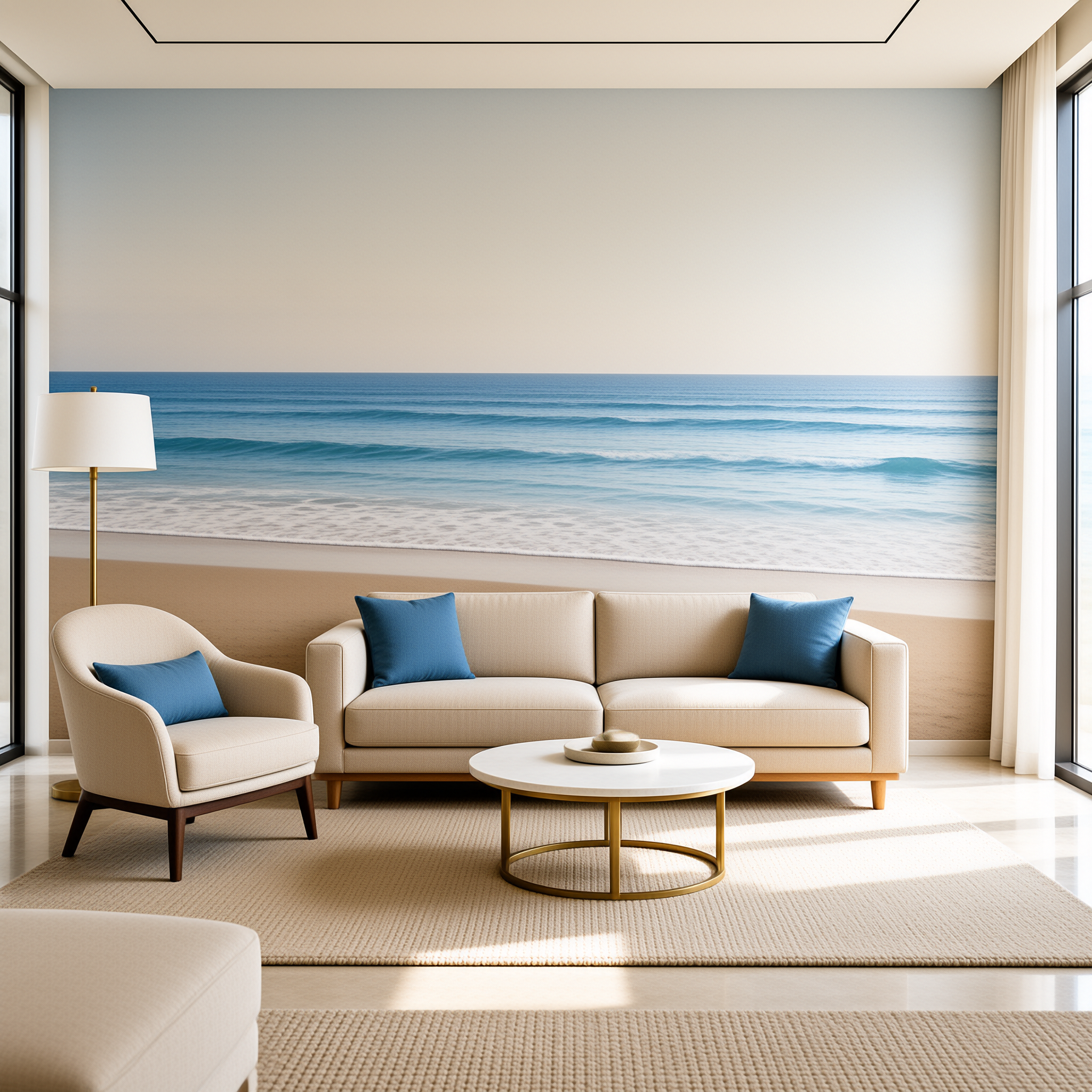
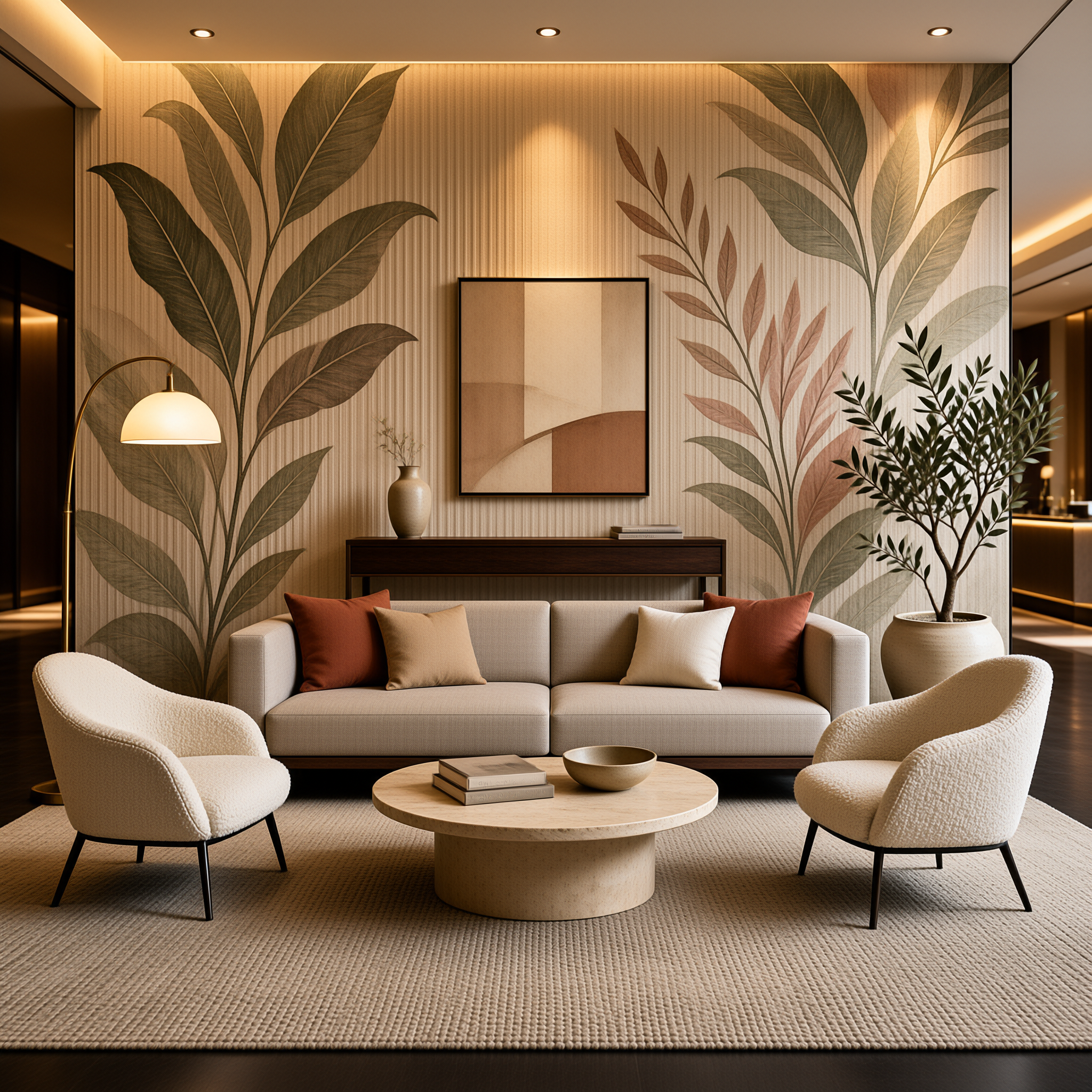
Botanical patterns and landscape murals read as calm and place-connected, which suits walls meant to relax a guest rather than perform.
Abstract artwork and geometric designs give structure and rhythm, and help tie a palette together across a large surface in contemporary urban properties.
Subtle textured finishes shift the interest to surface and light rather than imagery, so the wall feels rich without demanding attention.
Tonal or tonal-plus-accent schemes keep the wall quiet enough for a small room while still marking it as the focal point.
The direction should follow the atmosphere brief. A business hotel lobby, a resort lounge and a boutique guest room rarely want the same visual energy, and contemporary interiors featured by Dezeen show how often the wall is doing less than expected while the lighting and materials do the work.
Choosing Wallpaper Colors, Patterns, and Textures
Colour needs enough contrast to register as a focal point, but it should share at least one tone with surrounding surfaces. A wall that matches nothing nearby reads as an installed panel rather than part of the scheme, and a wall too close in value to its neighbours disappears when the room is empty.
A motif that looks right on an A4 sample can vanish on a six-metre elevation, and no amount of colour matching fixes a scale error.
Pattern scale follows viewing distance and wall proportion. The larger the wall and the further the typical standing distance, the larger the motif can be. Design publications such as Architectural Digest regularly show hotel walls where the composition is sized to the architecture, with the key motif placed on a sightline rather than centred by habit.
Visual rhythm matters as much as scale. Repeats, borders and panel breaks create movement, so decide early whether the wall should read as one continuous image or as a sequence. A mural that reads as a single picture behaves very differently from a motif that steps across panels.
Texture is the third lever. Velvet-texture wallpaper gives a soft, light-responsive surface that changes with the angle of view, which suits lounges and guest rooms where warmth is the goal. Canvas-texture wallpaper reads flatter and more architectural, which suits lobbies and public areas where the wall has to hold its composure under daylight. Either can carry custom print, and the texture-led direction keeps appearing in hospitality interiors covered by Dezeen.
How Do You Plan a Large Hotel Feature Wall?
You plan it from the finished wall, in writing, before any artwork is finalised. The manufacturer prints what you send, so the elevation survey is the real design document. Five checks cover most of the risk.
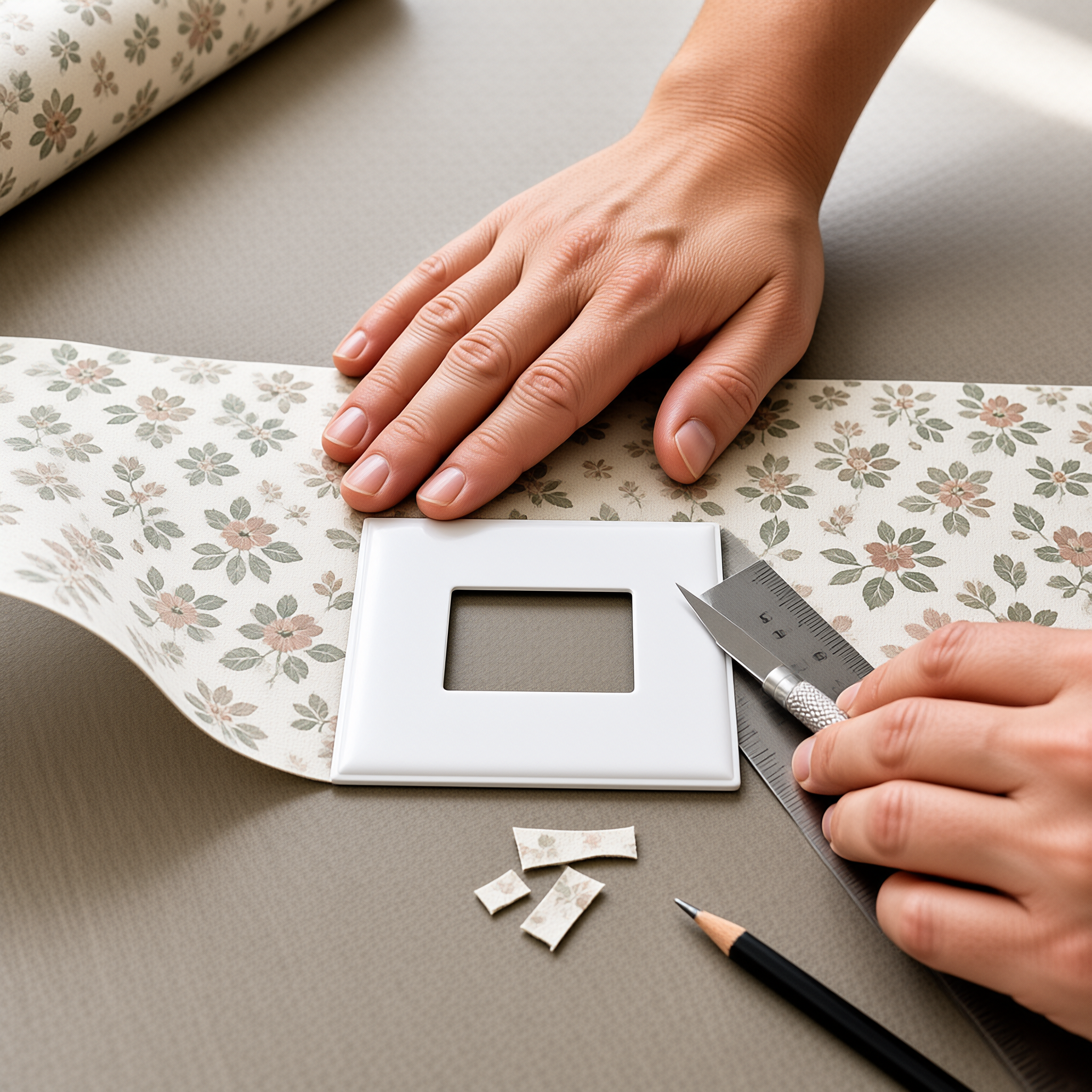
Measure the finished wall at several points, plus ceiling height, reveals, columns, outlets and any service penetrations.
Map the furniture: banquette heights, headboards, side tables and existing artwork set the visual centre of gravity the print must respect.
Record the lighting: downlights close to the wall, grazing light or strong daylight change how sheen reads and can expose seams.
Set the pattern position: decide where the key motif sits on the guest's sightline and how the image divides into panels.
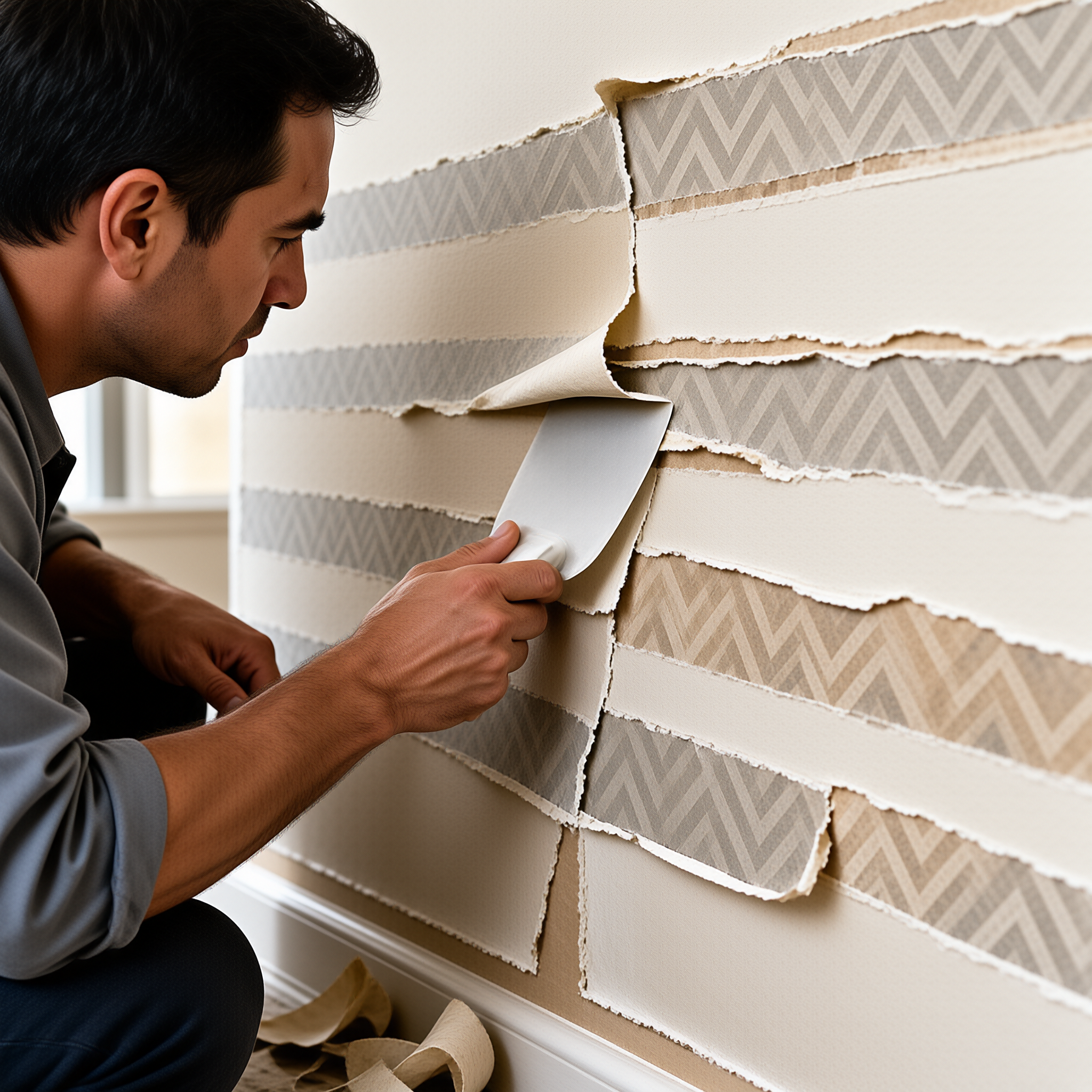
Agree substrate preparation and wall condition with the installer before printing, since a flat, sound wall is what makes seams invisible.
On a multi-panel mural, seam positions are settled on the elevation drawing before printing, never on site during installation.
Practical Considerations for Hotel Wallpaper Projects
Write the project requirement set first: area, exposure, cleaning regime, expected refurbishment cycle and design intent. That document lets a supplier answer the right question. Without it, every conversation returns to colour swatches and nothing gets resolved on performance.
Sample review should happen at full scale on the intended substrate, under the project's lighting where possible. Installation conditions belong in the same conversation, because room temperature, wall moisture and primer choice affect the finished result as much as the print. Wall condition is the one variable a designer can usually still control at this stage, and the wallpaper surface preparation guide sets out what a sound substrate looks like before printing begins.
Maintenance expectations should be written down rather than assumed. Hotel housekeeping teams use particular products, and some surfaces tolerate that routine better than others. If the wall cannot be cleaned the way the property actually cleans, the design will not survive its first year.
Working with a Custom Wallpaper Manufacturer
The workable sequence is short: concept discussion, artwork confirmation, sampling, specification approval, production, then delivery coordination. Each stage needs a named approver on the hotel side, because artwork confirmed by one party and printed for another is how costly reprints begin.
Bring the manufacturer into design development rather than tender. Early input on panel width, seam logic and file resolution saves redrawing later. Buyers sourcing for multiple properties can review the custom wallcovering OEM and ODM service to see how repeat programmes and brand families are handled across projects, and the broader custom wallcovering product range for reference.
Common Mistakes to Avoid When Designing Hotel Feature Walls
Choosing a pattern that dominates the room instead of accenting it, so the wall competes with the furniture rather than framing it.
Overlooking furniture proportions, which leaves the key motif hidden behind a banquette or off-centre above a headboard.
Working from unverified dimensions, especially on renovation projects where the built wall differs from the drawing.
Ignoring lighting conditions, which can flatten a textured surface or turn an angled downlight into a seam detector.
Leaving panel alignment to the installer, when seam placement is a design decision that belongs on the elevation.
Conclusion: Creating a Distinctive Hotel Interior with Hotel Feature Wall Wallpaper
A well-planned hotel feature wall wallpaper scheme does one job well: it gives the room a clear focal point that matches the concept, the lighting and the way guests actually use the space. The design work is mostly in the planning, from zone selection through scale testing, texture choice and panel layout.
Hotel owners and project buyers who involve the manufacturer early, measure the finished wall properly and confirm material suitability against their own standards end up with fewer surprises on site. The same discipline shows in hotel interiors published by Architectural Digest. Hospitality professionals exploring bespoke hotel murals for a new build or refurbishment can start a design conversation with VELORA and review the custom wallcovering range for their next project.
- What is a hotel feature wall wallpaper?
- It is a custom-printed wallcovering installed on the single surface a guest's eye is meant to land on. The print is produced for the measured wall rather than cut from a stock repeat.
- How much wall does a feature wall need?
- One full elevation or a clearly defined section is usually enough. Small partial panels often read as decoration rather than architecture.
- Can custom wallpaper be used behind a hotel bed headboard?
- Yes, provided the pattern is scaled to the headboard width and the material suits the zone. Confirm both points against the project specification before ordering.
- Is velvet-texture or canvas-texture wallpaper better for a hotel?
- Neither is better in general. Velvet texture suits warm, light-responsive interiors such as lounges and guest rooms, while canvas texture holds a flatter, more architectural look in public areas.
- How early should a wallpaper manufacturer be involved?
- During design development, before elevations are finalised. Early input on panel width, seam positions and artwork file quality prevents redrawing later.
- Can one motif be adapted across several hotel zones?
- Yes. Recolouring, rescaling or cropping the same artwork gives brand consistency without literal repetition between zones or properties.
- What information does a manufacturer need to quote?
- Wall dimensions at several points, substrate condition, quantity per zone, target material family and installation location. Add the project's compliance requirements if they apply. That set is what turns a hotel feature wall wallpaper idea into a priced, printable order.