A step-by-step custom wallpaper project process for B2B buyers: brief, artwork, material choice, measurements, proof approval, production and export delivery.
A custom wallpaper project process moves through fixed gates: brief, artwork, material choice, measurements, proof approval, production and export. Each gate locks a decision the next one depends on. When a buyer skips one, the cost usually shows up later as a reprint, a stalled installation or a panel that does not align on the wall.
Key Takeaways
Define the brief and name the single approver before any artwork is developed.
Approve the material sample and the design proof together, under the lighting the finished wall will have.
Send a measurement pack with every wall segment, not one average dimension.
Lock panel numbering, quantity and colour references in writing before production.
Treat any change after approval as a new specification, not a small edit.
Why Should Project Requirements Be Locked Before Production Begins?
Project type and application area set the direction for everything else. Hotel guestrooms, corridors, lobbies, restaurants, offices, retail units and show flats each push design and material choices differently. Humid or high-contact wall zones should be flagged at this stage, and a reference like our guide to commercial wallcovering for hotels helps you frame those questions early.
State the design concept and any material preference up front. If the client already leans towards a velvet-texture finish, sampling and artwork development can head in one direction instead of two. Vague descriptions at brief stage usually turn into extra rounds of samples later.
Give expected quantities by room type or by wall, expressed as approximate square metres. Add a waste allowance plus stock for future replacement, because matching a new printed panel to an older run is rarely straightforward.
Name the person who can approve design changes on the client side. Unclear approval authority is one of the most common reasons a project stalls mid-production. The IIDA treats interior design as a documented professional practice, which is a fair standard for how the brief itself should be handled.
A written brief that names the approver and the approval date removes more schedule risk than any single material upgrade.
Design Development and Pattern Selection
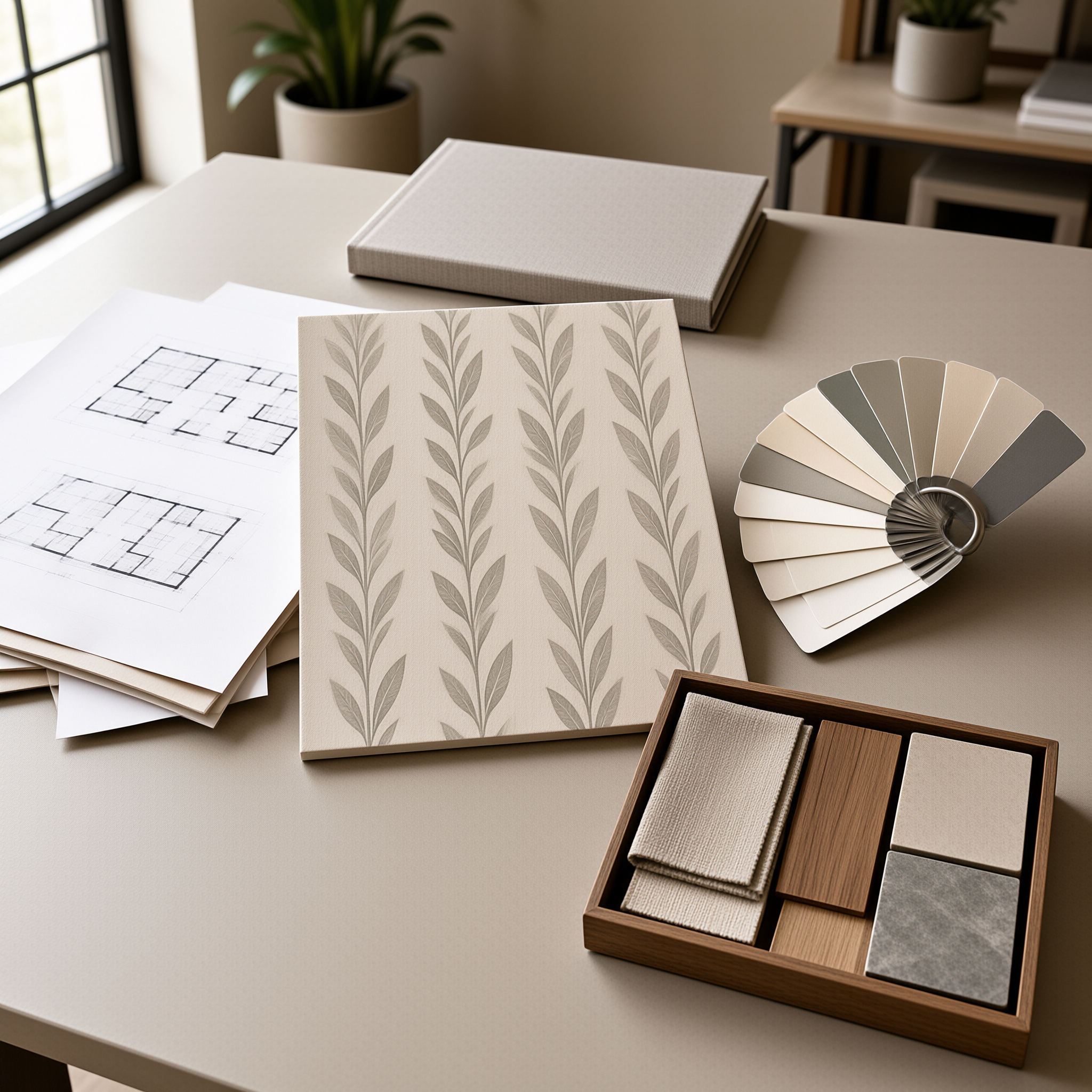
Send reference images, mood boards and scale cues rather than adjectives. Say clearly whether the design is a new original artwork, an adaptation of an existing catalogue pattern, or a recolour of artwork the client already owns. Each route needs different files and a different approval path.
Check proportions against the real wall. A motif that looks delicate on a laptop screen can turn oversized once scaled to a full-height wall, and a heavily detailed file can lose definition when enlarged. Review the artwork at print scale on a section of the elevation before it goes any further.
Confirm the pattern repeat and where the motif lands. Corners, window reveals, lift lobbies and the outer edges of feature walls are where patterns fail most often. Publications such as Dezeen show how large-scale pattern behaves in contemporary interiors, which is useful context when you need to defend a scale decision to a client.
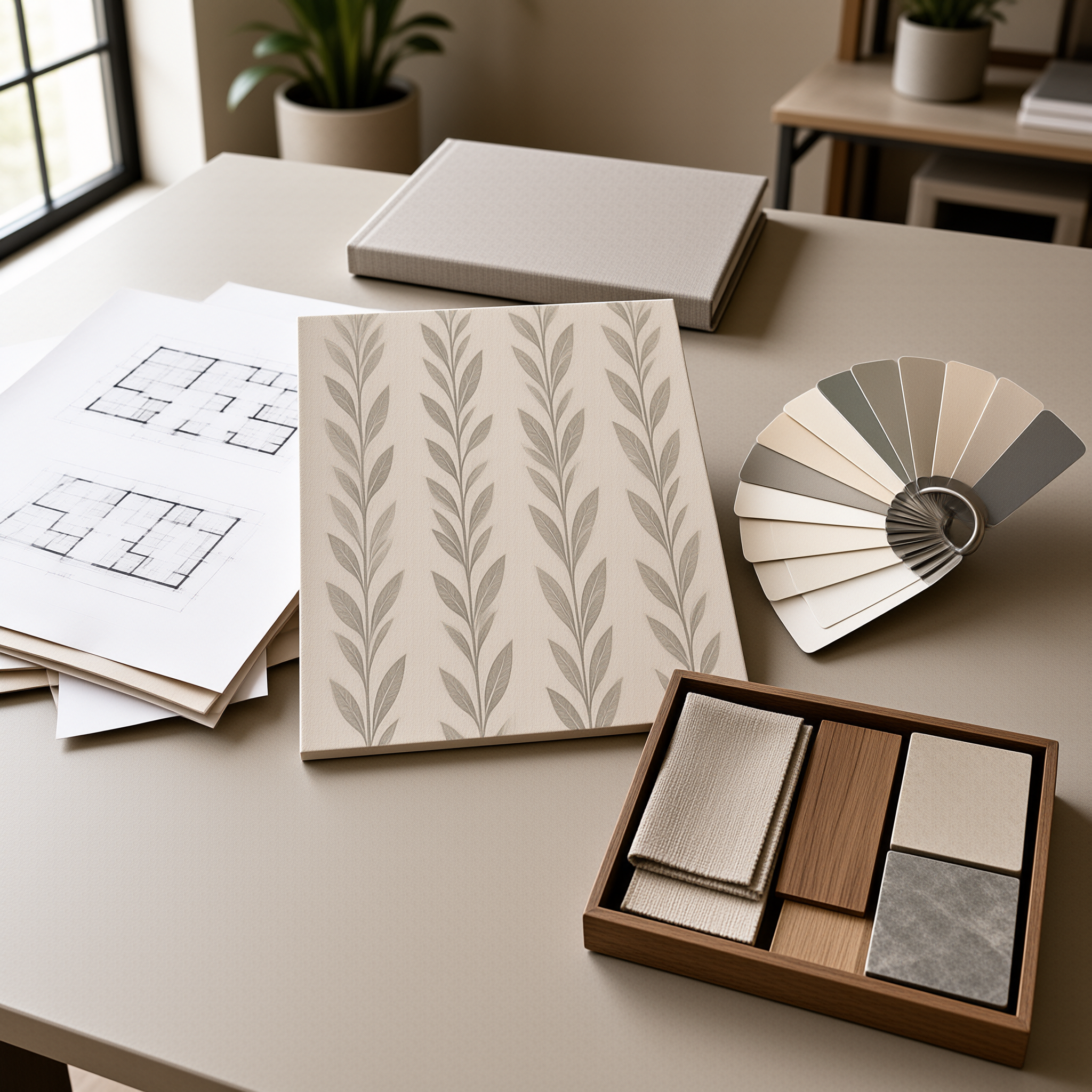
Agree colour as a defined palette. Reference codes or physical swatches remove the ambiguity in words like "warmer" or "more muted", and they give the printer something measurable to match against.
Choosing the Right Wallpaper Material: Velvet-Texture vs Canvas-Texture
Velvet-texture wallpaper reads soft, deep and slightly reflective. Colour saturation is richer and the surface is tactile, which suits guestroom headboard walls, lounges and feature walls where the wall is meant to be noticed.
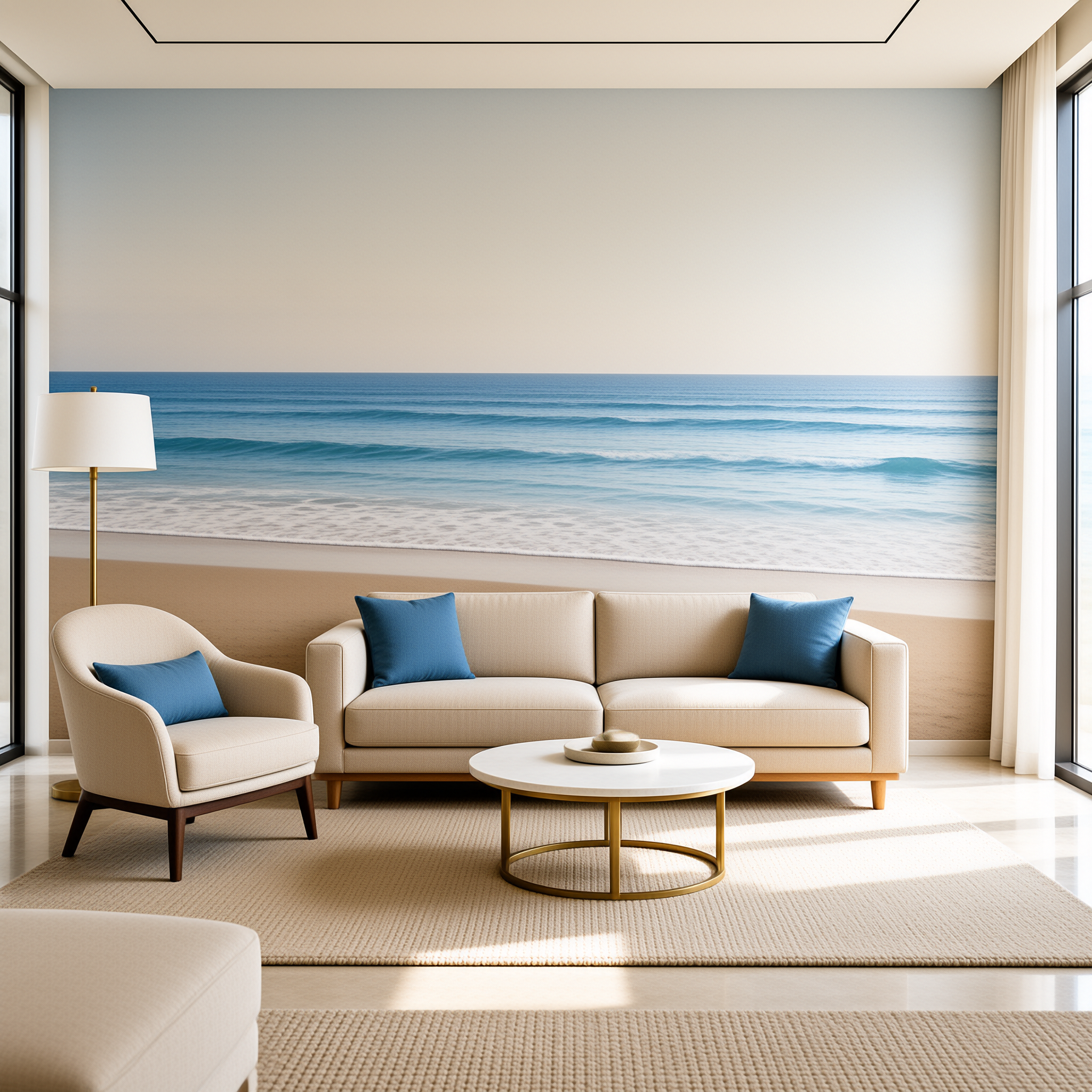
Canvas-texture wallpaper reads matte and architectural. The woven surface carries large-format murals and neutral or tonal palettes well, and it sits calmly in public areas and workspaces where the wall supports the room rather than leading it. Architectural Digest is a useful reference for how surface finish shapes the perceived quality of a room.
The same artwork will look different on each substrate. Approve material and design together rather than signing off the design and choosing the material later, because texture changes how colour and detail read at viewing distance.
| Decision factor | Velvet-texture wallpaper | Canvas-texture wallpaper |
|---|---|---|
| Visual character | Soft, deep, reflective | Matte, woven, architectural |
| Colour behaviour | Richer saturation and darker tones | Tonal, even coverage |
| Typical project use | Feature walls, headboard walls, lounges | Public areas, corridors, workspaces |
| Pattern suitability | Rich repeats and tonal designs | Large murals and neutral palettes |
| Approval note | Judge colour on the substrate, not on screen | Judge detail and weave at viewing distance |
Ask the custom wallcovering manufacturer which substrates they can supply for each zone instead of assuming one material covers the whole building. Bathrooms, service corridors and back-of-house walls often need a different answer. VELORA's custom wallcovering OEM/ODM service shows how substrate options sit alongside artwork development.
Wall Measurements and Project Specifications: The Document That Prevents Reprints
Measurements are where most reprints begin. One average wall height is not enough for a building with several floor levels or a corridor that changes section halfway along.
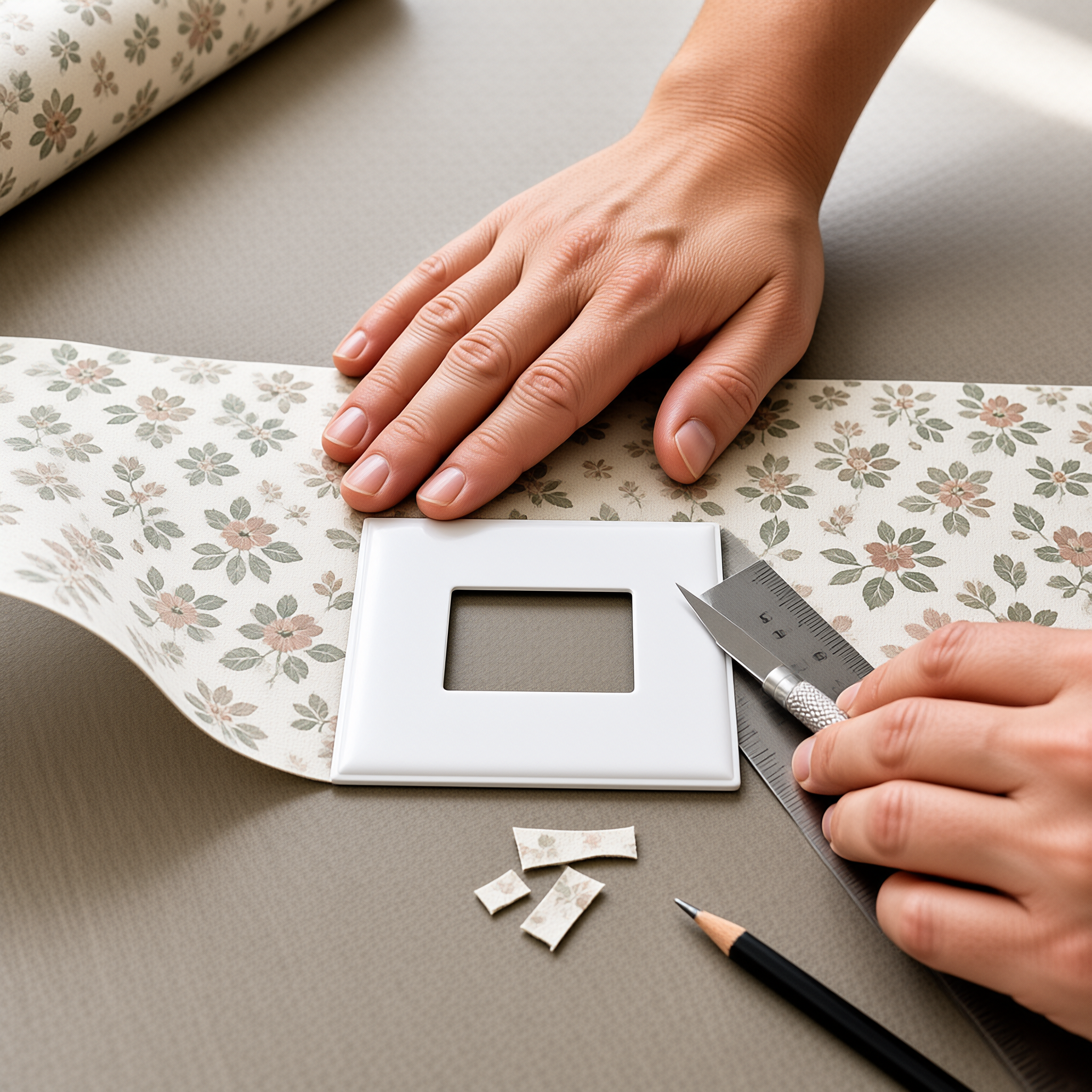
Width and height for each wall segment recorded separately, including columns, reveals, doorway returns and sloped ceilings.
Wall divisions and panel break points agreed in advance rather than left to the installer on site.
Pattern placement defined: centred on a feature wall, aligned to a fixed start point, or mirrored across a corner.
Floor-to-ceiling height changes between floors and between room types noted on the same drawing.
A second on-site verification, plus a re-check if the site has changed since the original survey.
Panel width and break points affect installation as much as appearance. A panel that ends mid-motif forces the installer to improvise, and improvisation on a printed wall is visible from across the room.
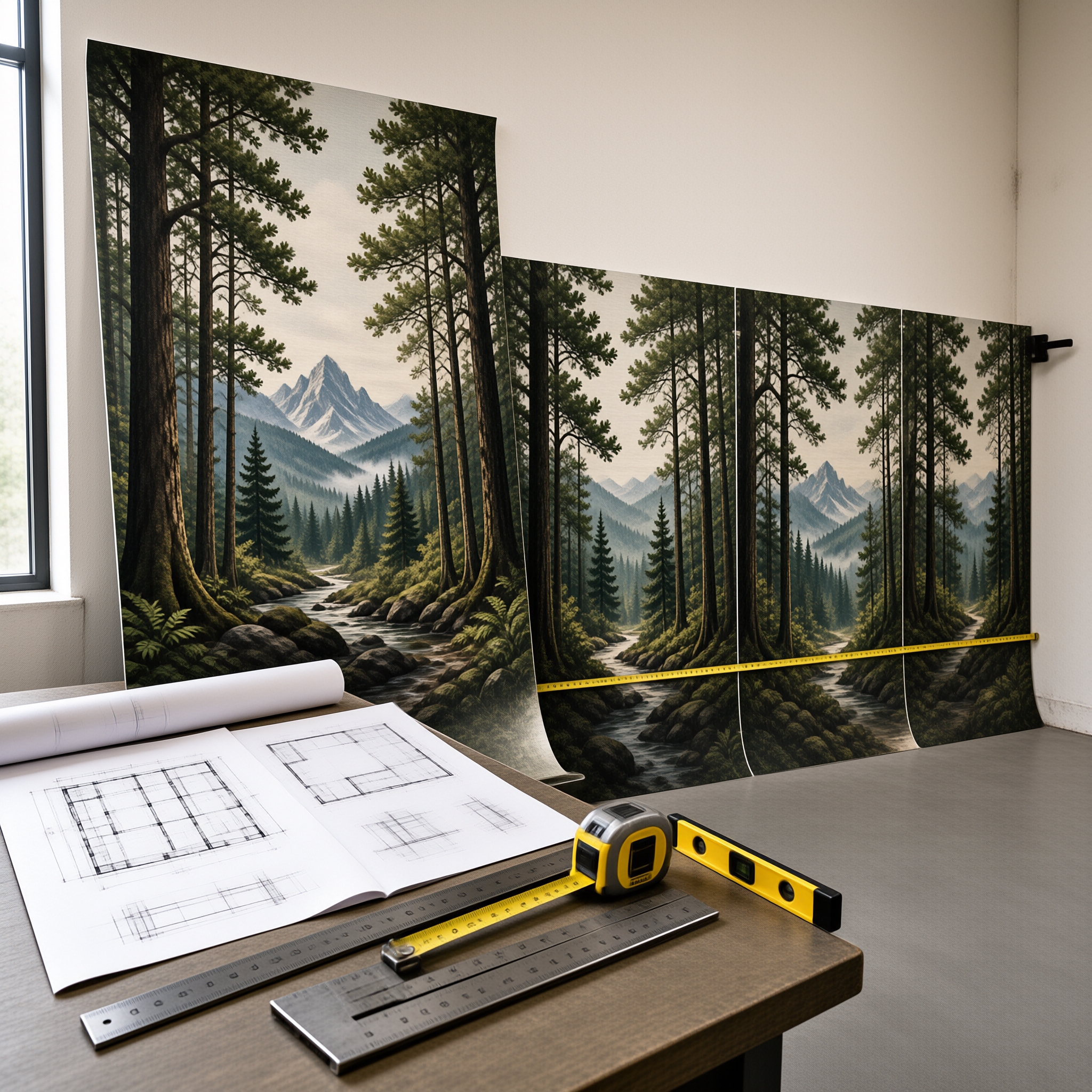
Send the measurement pack as elevations, not descriptions. A marked-up drawing is the difference between a factory reading your intent and a factory guessing at it.
Sample Review and Design Confirmation: The Approval Gate
Review the material sample for texture and base tone, and the design proof for colour, scale and repeat. Then look at both together, under the lighting the finished wall will have. A proof approved under bright office light can read flat in a dim corridor or overly warm under hotel downlights.
Put the approval in writing, and make it cover material, colour, scale, repeat, panel count, panel numbering and quantity. Anything left out of that document is open to interpretation later, and interpretation is where disputes start.
Collect sign-off from everyone with authority to change the design. In most projects that means the designer plus the owner or main contractor, on one document rather than across a chain of emails. Documented approval of this kind is consistent with the professional practice standard the IIDA describes for interior designers.
What Happens During the Custom Wallpaper Manufacturing Process?
Confirmed artwork is prepared for the selected substrate, material is drawn against the approved sample, and the run is printed from locked files. After approval, a change should be treated as a new specification rather than a tweak, because colour, repeat and panel layout are all set against the approved proof.
Inspection typically covers colour consistency across the full run, visible print defects, and panel numbering and sequence against the approved layout. Ask how those results will be reported and how discrepancies are handled before shipment. Buyers running OEM or ODM wallpaper manufacturing programmes should also agree who holds the approved files. The wallpaper OEM services guide for B2B buyers covers that side of the relationship.
Do not assume certifications, factory capacity or performance ratings. If a figure matters to your specification, ask the supplier to document it before you build it into the tender.
The sample and the proof together are the working contract: whatever is signed off in writing is what the factory prints against.
Packaging and International Delivery Preparation
Product identification matters more than carton appearance. Room or area labels, panel sequence numbers and quantity per carton let the installation team find the right roll without opening every box on site.
Agree packaging suited to the transport mode and the handling chain, and confirm total quantity against the approved panel list before dispatch. For an overseas project, settle shipping terms, documentation responsibilities and the receiving contact early rather than at the point of dispatch.
Coordinate delivery with the installation schedule. Material that arrives weeks early tends to be stored in whatever space is available and handled several times before it is hung.
Common Mistakes to Avoid in Custom Wallpaper Projects
Incomplete measurements: one average wall height instead of a segment-by-segment survey, which shows up as gaps or cut motifs on site.
Unclear artwork: sending a screen image instead of a print-ready file, so scale and detail shift once enlarged.
Unconfirmed colours: approving "the warmer option" verbally and discovering the printed result is not what the client pictured.
Overlooked pattern alignment: ignoring corners, reveals and lift lobbies until installation day.
Changes after production approval: treating a late design tweak as small when it resets colour matching and panel numbering.
No single approver: sign-off spread across emails, so nobody owns the final decision.
Building a More Efficient Custom Wallpaper Project Process
A custom wallpaper project runs on communication discipline. A written brief, artwork checked at print scale, material and proof approved together, a segment-by-segment measurement pack and one signed approval document cover most of the risk. The remaining variable is the manufacturer's own controls, which is why inspection reporting and panel labelling are worth asking about early.
If you are planning a hotel, workplace or retail installation and want to compare options before artwork is fixed, send your brief and elevations to VELORA. A VELORA review can cover substrate choices, artwork readiness and panel layout, and quote against your measurement pack, keeping the custom wallpaper project process on a documented path from brief to delivery. Start with the VELORA wallcovering product range or contact us directly to discuss your requirements.
- How long does a custom wallpaper project take from brief to delivery?
- Timing depends on how many artwork rounds you need, substrate availability and the shipping mode. Ask the manufacturer for a schedule tied to your approval date rather than a generic lead time.
- What files should I supply for bespoke wallpaper production?
- Send high-resolution artwork or vector files, your colour references and marked-up elevations showing every wall segment and panel break.
- Can the same design be printed on velvet-texture and canvas-texture wallpaper?
- Yes, but the two substrates read differently in colour depth and texture. Approve a sample of each under the lighting the finished wall will have before you commit the full order.
- Who should approve the design proof?
- Everyone with authority to change the design, usually the designer plus the owner or main contractor, signing one document rather than replying across an email chain.
- What happens if site measurements change after approval?
- Treat it as a new specification. Panel layout, panel numbering, colour matching and schedule may all be affected, so raise it before production starts rather than after.
- How should panels be labelled for an overseas installation?
- Label by room or area, add the panel sequence number and state the quantity per carton. The installation team can then work from the approved layout without opening every box.
- Should I order extra stock beyond the measured area?
- Yes. Add a waste allowance for cutting and a small stock quantity for future repairs or replacement panels. That is a standard precaution in any custom wallpaper project process, since matching a later print run is difficult.